
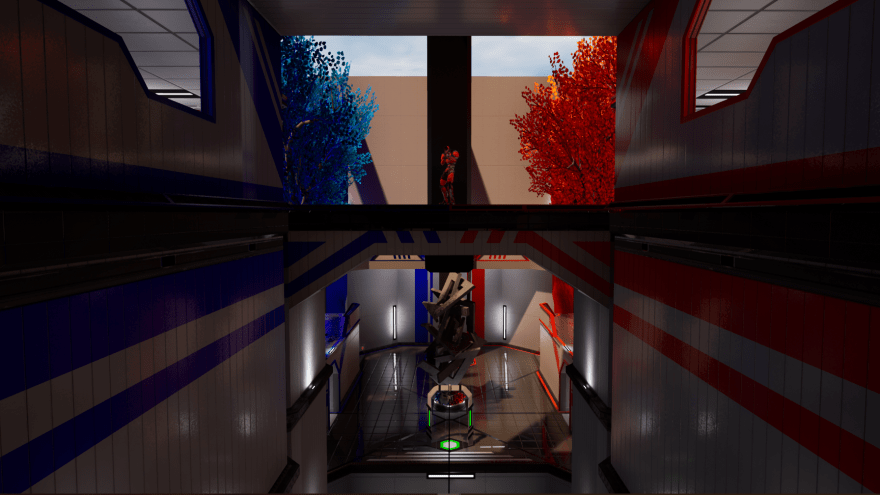

MassVR is free-roam virtual reality at massive scale. We use a mix of consumer and proprietary technology to make it possible.
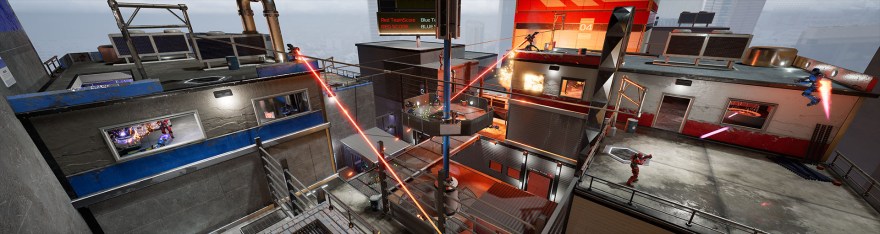
I joined the team at MassVR in April of 2018, a couple months before graduating. I was brought on during the planning phase of the team’s next project to work as a level design and 3D artist—chosen for my previous work on Elements Tower Defense VR and familiarity with Unreal Engine 4 (UE4) and Maya. Below is a promotional video we recently put together to explain what MassVR is all about:
MassVR’s upcoming project, tentatively titled Heroes of Magic was my focus from April 2018 to October 2018. The title is a cooperative 2-4 player magic- and fantasy-themed puzzle game with light combat.
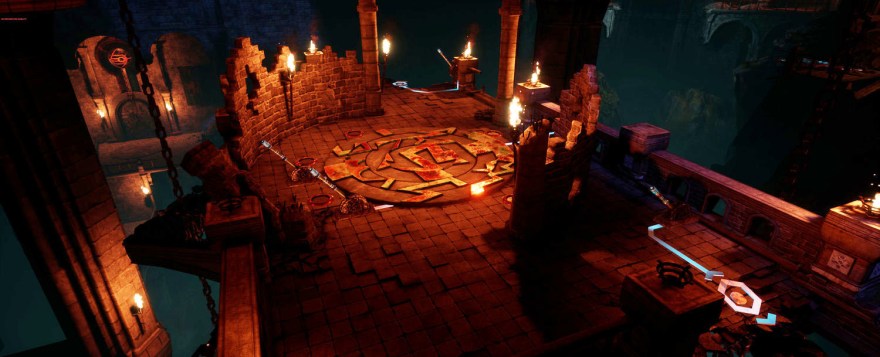 I worked on Heroes of Magic in UE 4.19 with 3D modeling done in Maya for any custom assets we needed. I helped to write the project’s GDD and designed (in part or in full) all of the game’s sprawling levels and the puzzles and combat scenarios contained within.
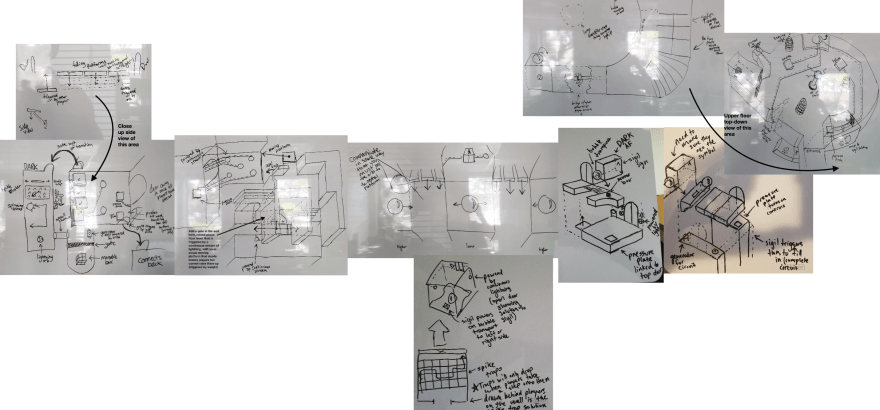
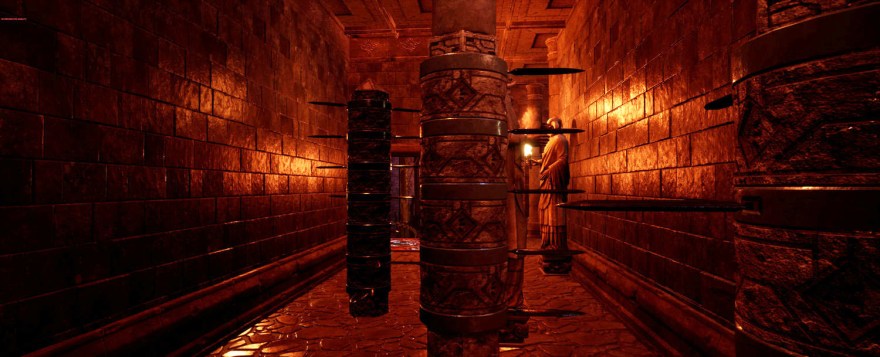 With such a small team (six people), my responsibilities run much broader than just a level designer or 3D artist. I created the majority of the title’s particle effects using UE4’s Cascade (for our magical spells); used UE4’s Blueprint system to create environmental traps (like the ones pictured above) and interactive objects; and animated various cinematics using UE4’s Sequencer tool.


The constraints posed by warehouse VR game design are incredibly unique and demanding, and have been deeply rewarding to tackle. With Heroes of Magic we sought to create a massive and sprawling game world, with a relatively non-linear layout and a lack of loading screens or obvious transitions. We deployed a great number of unique tricks to make our roughly 35 ft x 70 ft warehouse into a seemingly infinite space for players. Our full warehouse was roughly 70 ft x 70 ft, but our goal with Heroes of Magic was to have two sessions of the game running at one time, side-by-side in a single warehouse space.
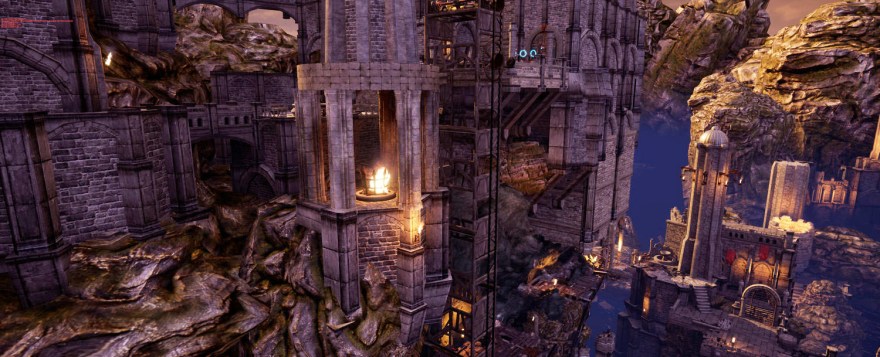
We started the project with our target headset being the Oculus Rift (shown in all the images on this page), but pivoted to the Samsung HMD Odyssey roughly a month into the project due to its superior motion tracking (with built-in cameras) and higher resolution (1440 x 1600 vs 1080 x 1200). The disparity between these headsets cannot be overstated. Samsung’s hardware along with Microsoft’s Mixed Reality drivers are significantly better in every way than the current Oculus drivers for our unique warehouse VR setup. Attached to the Odyssey is a Leap Motion camera, whose data we use for non-dominant hand tracking without the need for a controller.
In October we wrapped up a vertical slice of Heroes of Magic and shifted focus to VR Champions, the multiplayer shooter shown in the videos at the top of the page and the images further down.
 Pivoting the team to VR Champions included new map creation, a full refactor of the game’s art style, and gameplay redesign and rebalancing among other things.
The original art style for the game was much more industrial, and is (unfortunately) showcased in the recent promotional video I embedded at the top of the page, and the image to the left.
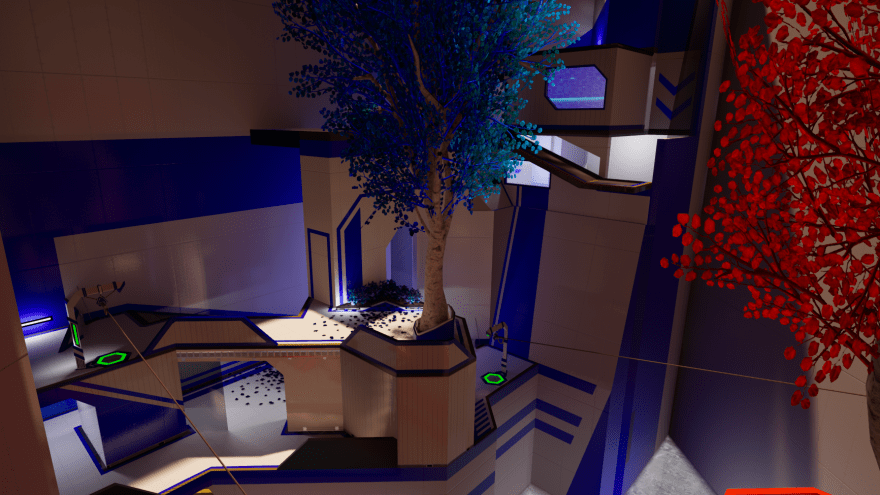
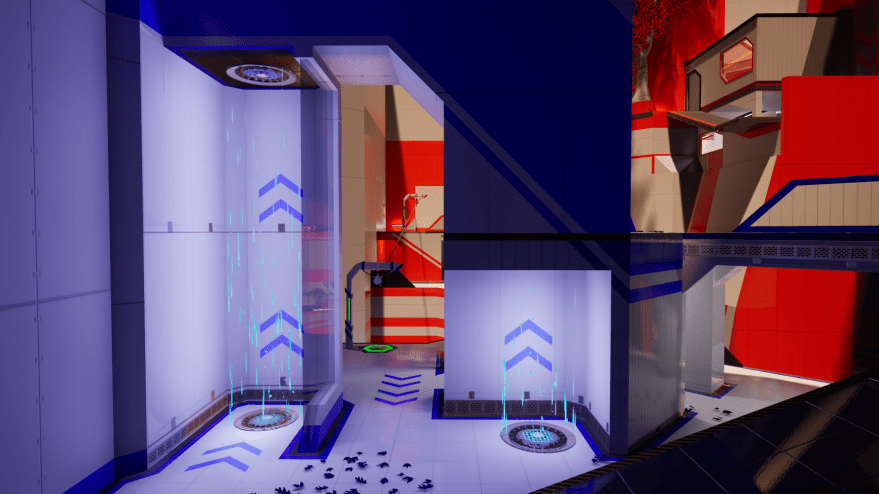
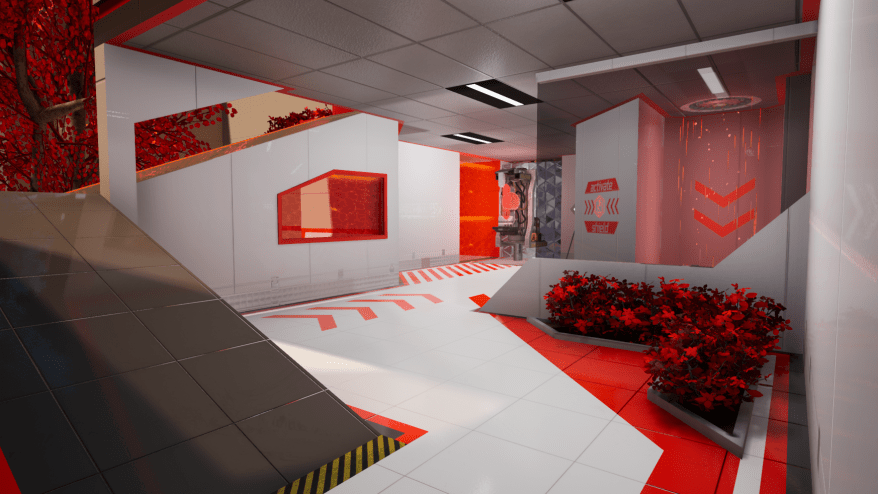
Our new art style is entirely different; we decided upon a cleaner, more modern aesthetic to bring the game greater cohesion and to emphasize its futuristic nature. We drew heavy visual inspiration from Mirror’s Edge, Halo, and Portal.

Our efforts to improve VR Champions were set to coincide with the opening of a new MassVR location with four full warehouse spaces, a notable upgrade from the single warehouse we used to have. Unfortunately, those new warehouse spaces all have slightly different

dimensions and column placements, necessitating a map redesign to maximize potential and keep players safe.
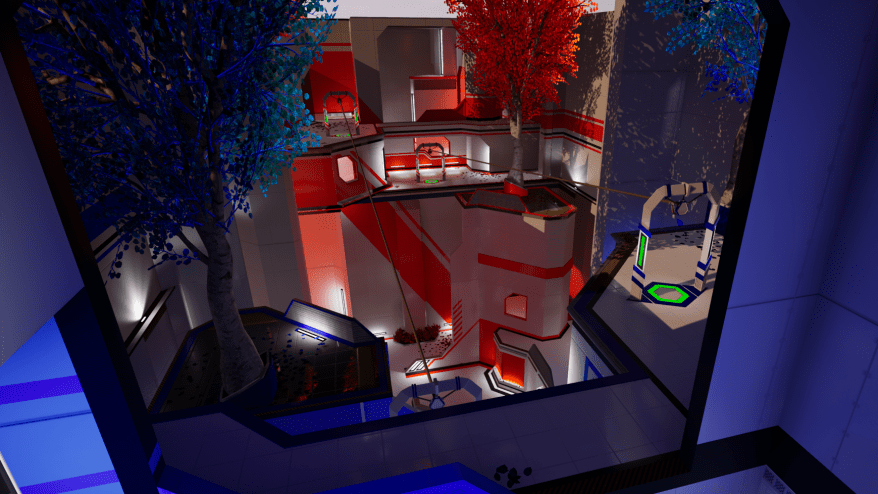
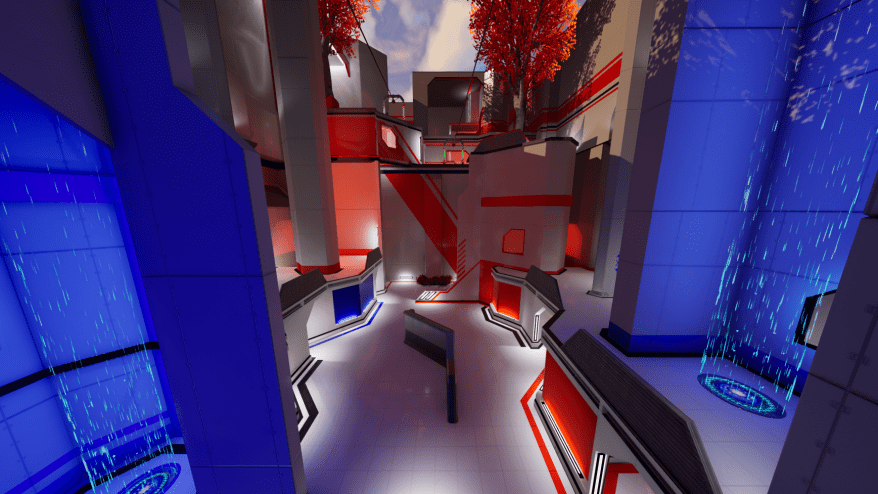
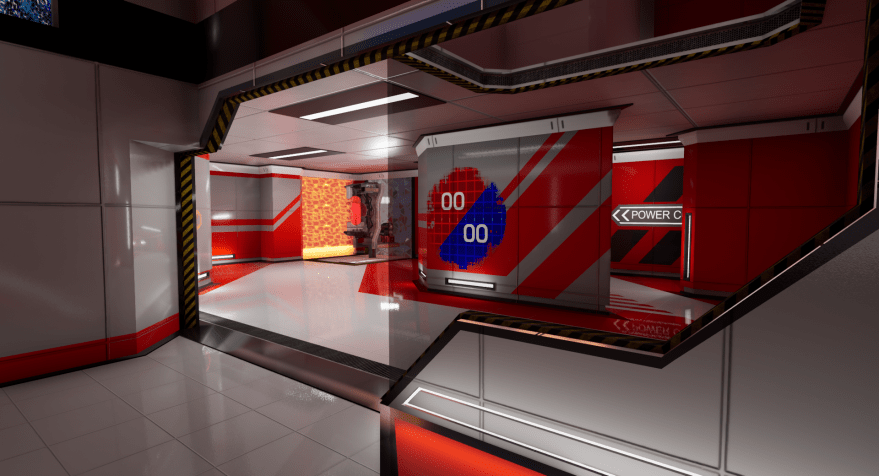
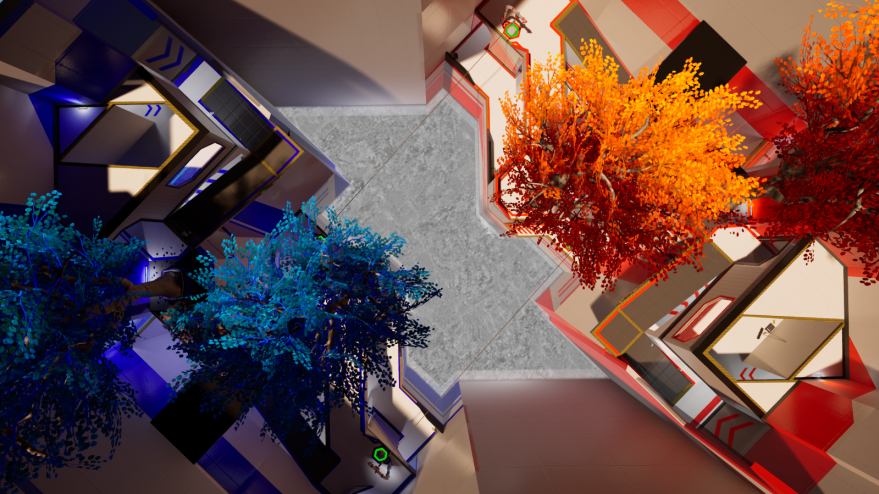
I was (and am) fully in charge of the game’s map design—from the initial sketches, to the grey boxing and testing, to the final detailed modeling of all assets. So far I have created three new maps for VR Champions: one for our two upstairs arenas, one for our two downstairs arenas, and one for our sister location that is opening soon in Bloomington, IL.
I outline my design process below.
Concourse
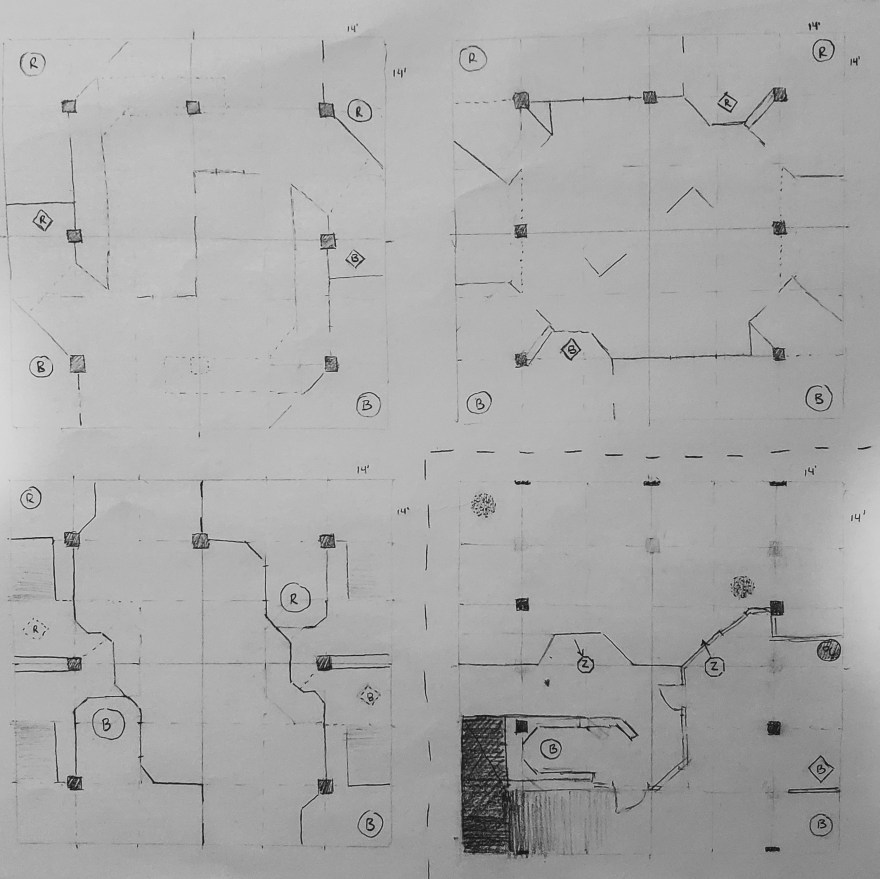
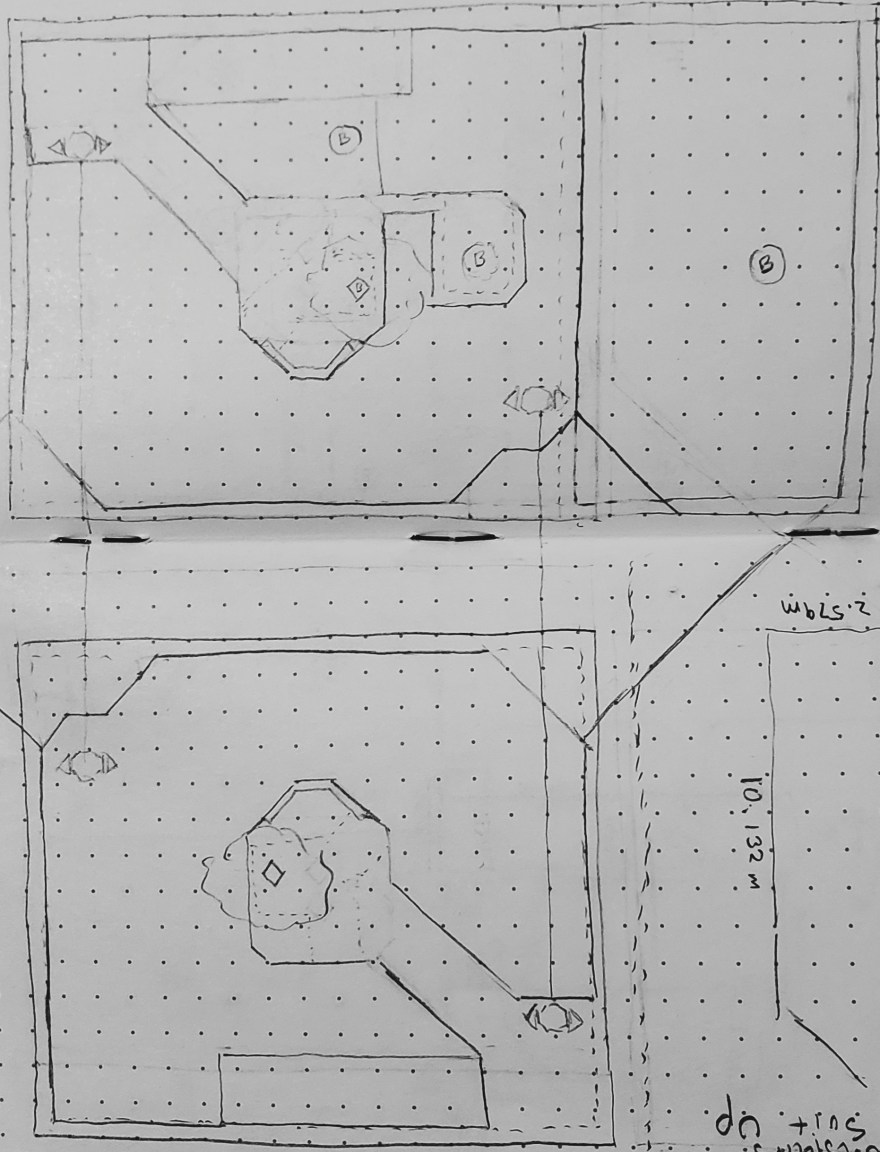
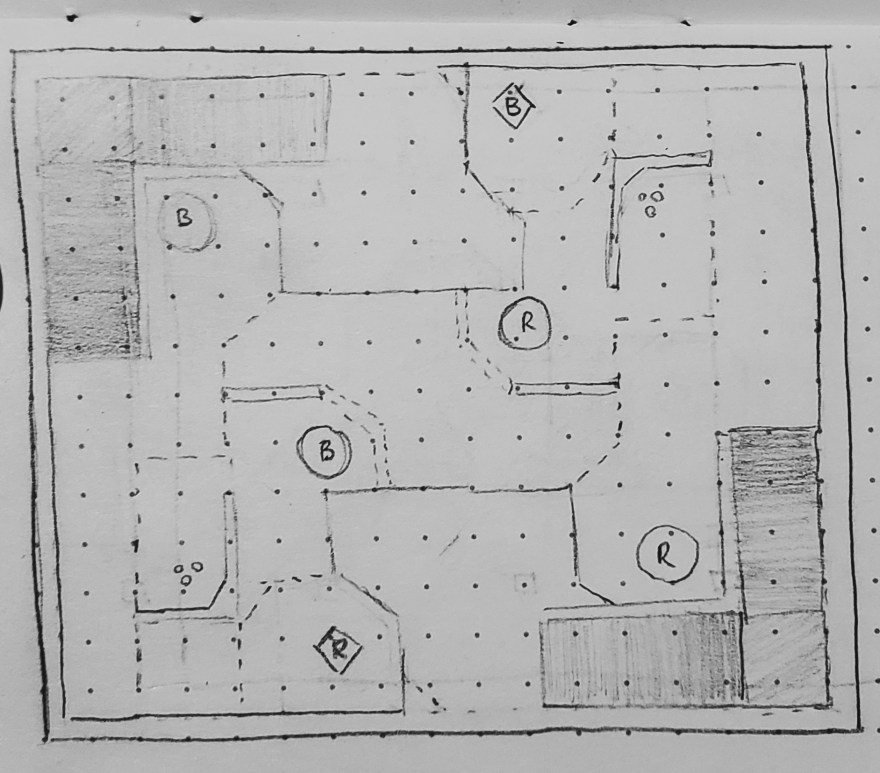
The map that became Concourse started as most traditional level designs do: as a paper sketch. The only caveat was, of course, that this was a MassVR level, so it started as a paper sketch with hard dimensions and structural columns I had to design around. This is something I never thought I’d have to think about as a level designer but it’s a constraint that truly pushes me to be my most creative. Below is an outline of the process that led to the finished design of Concourse.
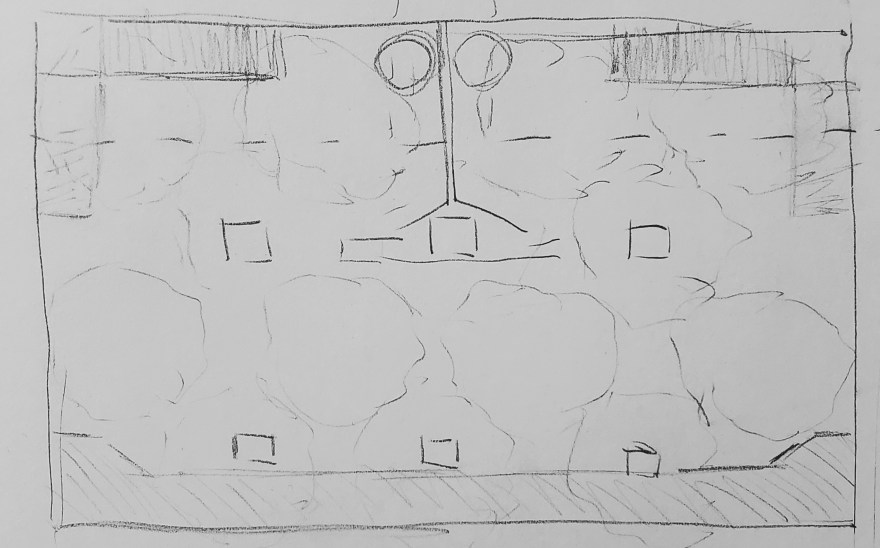
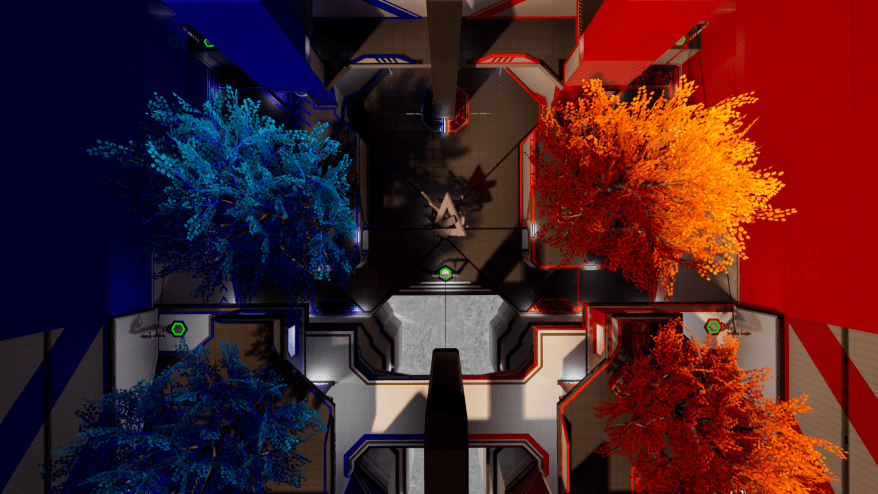
Our downstairs arenas are 112 ft x 70 ft with six structural columns off-center. Priority number one was making sure the map felt open even without hindering the safety of players. My initial idea was to hide the columns in the trunks of trees, creating a rooftop garden in the center of the map. For each teams base, I would hide the columns in conveniently placed walls. Above my first quick sketch, which I fleshed out more below.

I liked the direction I was headed with the more detailed layout above, but wasn’t entirely thrilled with this design so I expanded upon it below in another sketch.
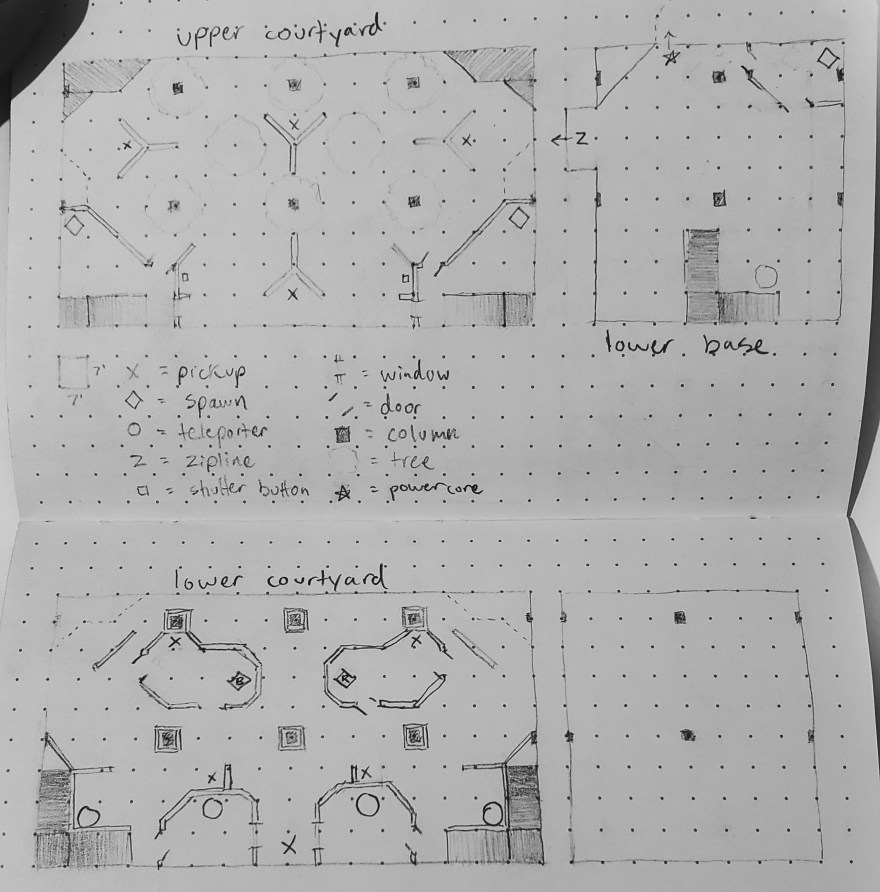
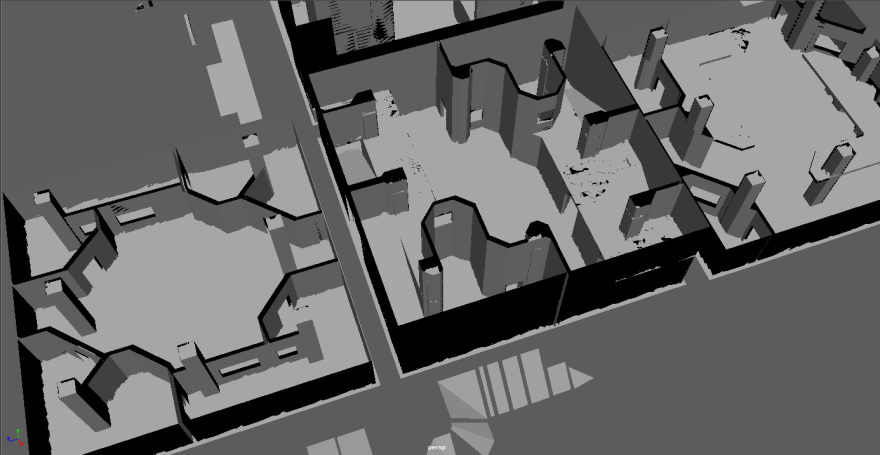
I liked where things were headed now, and used these two sketches as the basis for a UE4 brush buildout (shown below).


Things still just didn’t feel totally right. The map felt a little empty, the trees—while pretty—hindered visibility from each team’s base, and the basement section was wholly unnecessary. It was back to the drawing board.

I liked this design much better already, it was far more open and made better use of the columns. I eagerly opened up UE4 and went back to work creating a brush version of the map.


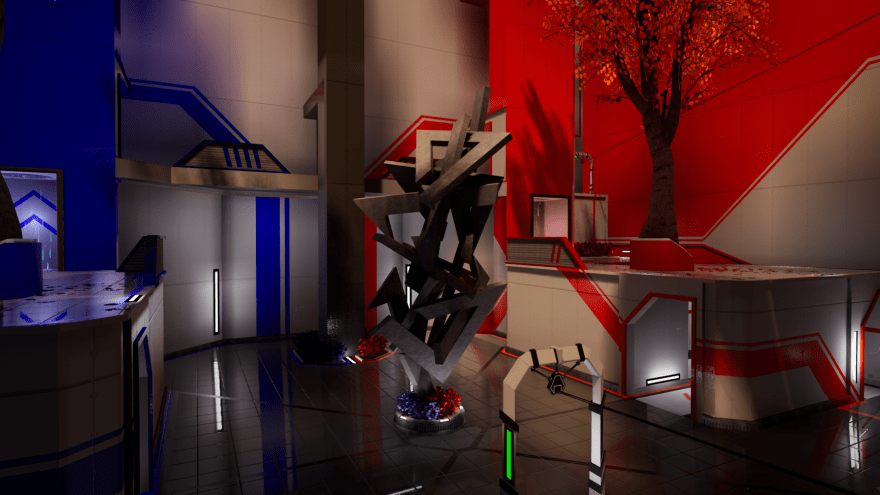
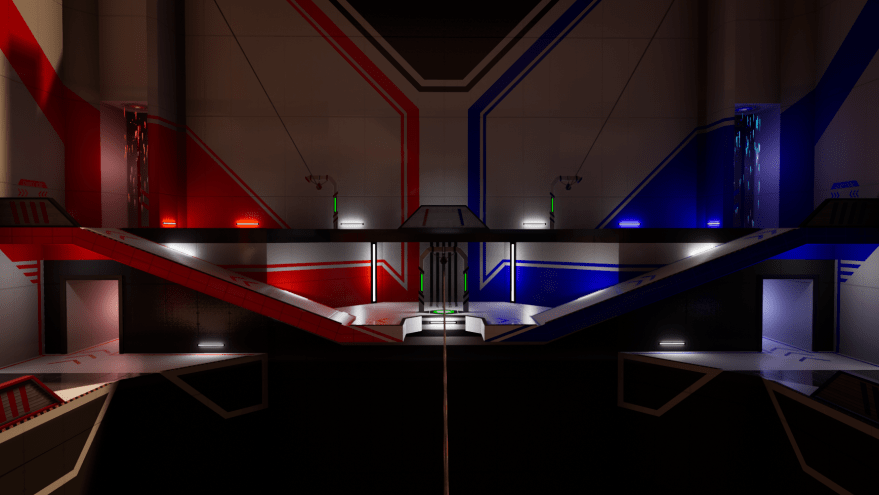
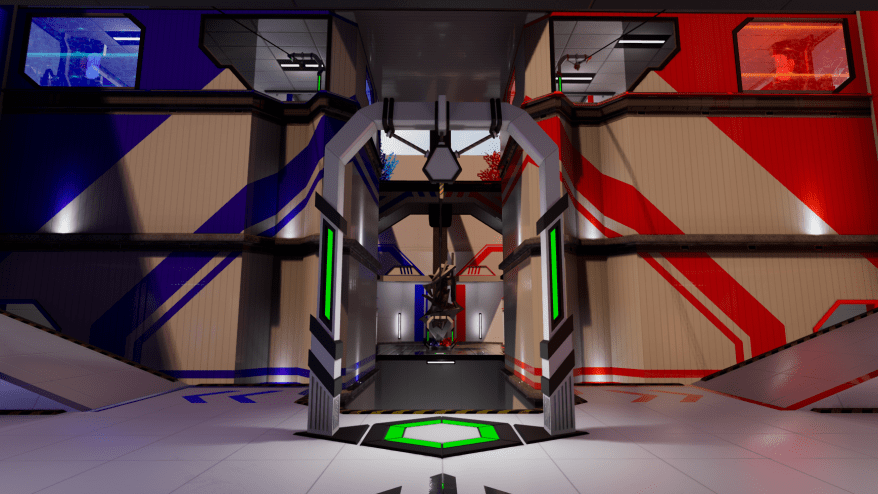
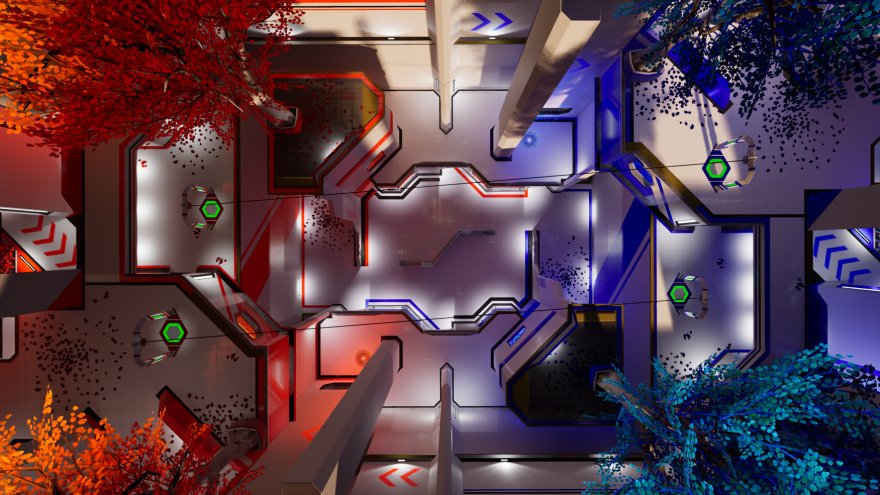
Seeing the 2D sketch come to life solidified this iteration for and for the rest of the team—this would be the first map for our downstairs arenas, and we’d call it Concourse. I immediately opened Maya and began work on the finished product. The finalized map is shown below.
Vantage
I won’t detailed the entire process for this map, but I’ll show the design milestones.


Crossfire
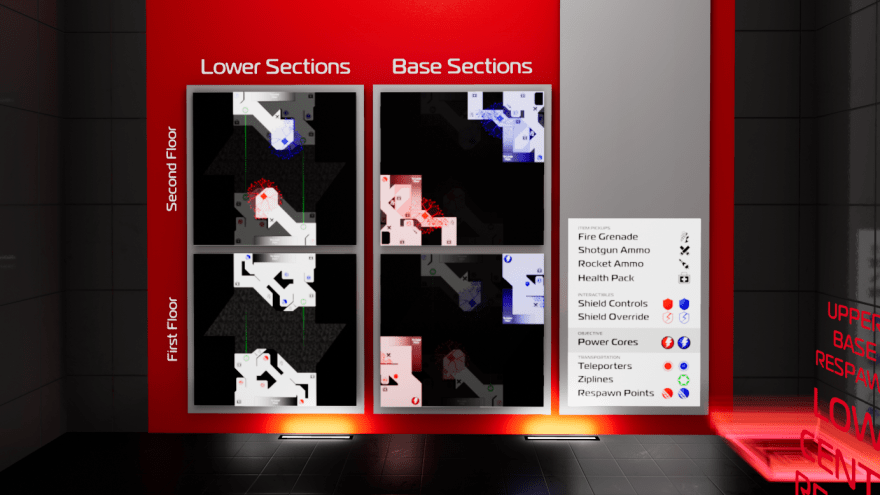
I also designed a full competitive ranking system for our players. This ranking system will allow us to host tournaments every few months at our new location with the requisite competitive spirit. For inspiration I looked to Elo (used in Counterstrike among other games), Overwatch, and Rainbow Six: Siege. Complementing the ranking system are a XP leveling system, a kill streak system, and cosmetic tweaks—all my own designs.
I’ll update this post with further developments in both projects as they come. My work at MassVR has taught me an immense amount about game design, puzzle design, cooperative and competitive multiplayer map design, UE4, VR, Maya, Leap Motion and more. It’s been both trying and rewarding—and truly fun.


 Berto Ritger