2020 was a rough year for everyone. As a Location-Based Entertainment company, MassVR was hit hard. We had to close our doors to the public for a majority of the year and we on the dev team shifted focus to the future, shelving plans to further update VR Champions or Hallow Realm. During that time we worked on multiple tech demos meant to prove out the new technology used in our upcoming Surge Stadium facility, pre-production for a shelved successor to VR Champions, and months of full-production on a spellcasting cooperative PVE arena-scale VR title called Inkdom (the game in the cover image of this page).
Next Generation Arena-Scale VR Tech Demo

My contributions to the tech demos included:
- All level design—from the blockout stage to full implementation, levels were designed to be linear and to introduce every new hardware feature and gameplay in a rapid but digestible way; intense moments were deliberately designed to take place while players were physically standing on the haptic floor.
- Various Blueprint assets—I wrote the networked Blueprint code (and produced the relevant material functions and particles) that powers the torch’s lighting, the logic of burnable objects, and fire spreading behavior between similar burnable objects; the burning and squashing behavior of the bugs; the keycard and door lock/unlock interactions; and the networked moveable drawers.
Our first endeavor involved two tech demos. These tech demos were meant to explore what new tech we may use at Surge Stadium. At Surge we planned to improve hardware across the board, and to jump from just hand-tracking to full-body tracking. Our hardware team also built (and our programmers implemented) a proprietary haptic floor that vibrated the physical floor based on in-game actions.

In the video below you’ll hear my commentary about the design goals and new features of the second tech demo with a brief glimpse into my level design process for it:
I edited the video and GIFs above in Adobe Premiere Pro.
Untitled Arena Shooter
Following these tech demo projects, we felt it was finally time to put what we’d learned about our new hardware and feature set and apply them to a full-fledged successor to VR Champions. This title was shelved right before full production began.
My contributions to the shelved VR Champions successor included:
- Various prototype mechanics using Blueprint code and the UE4 Gameplay Ability System—a shield that could deflect bullets and absorb damage, optimizations to destructible meshes to help them better perform in networked VR, a weapon purchasing menu created in UMG that would fly towards players who approached a prototype “shop”, and a few other small things
- A preliminary Game Design Document—This included designs for ranged, throwable, and melee weapons, healing and defensive abilities, possible game modes and how best to adapt them to arena-scale VR, and UI/UX design proposals.
- A detailed Sci-Fi backstory pitch and corresponding cooperative 30-minute tutorial structure that is shown below:
Following the sudden shelving of the VR Champions successor, we started work on something completely different: Inkdom.
Inkdom: Co-Op PVE Spellcasting

Inkdom would still be an arena-scale VR title for Surge Stadium, but mechanically it would be a large departure for us—a pseudo-linear cooperative PVE spellcasting game with vibrant, stylized graphics. I was Lead Designer on Inkdom.
My contributions to Inkdom included:
- The full Game Design Document—all spellcasting design (with co-op elemental combos); co-op healing abilities; enemy combat abilities, behavior, and personalities; game structure, level progression, and win condition; proposed UI & UX implementation; and just about everything else about the game.
- The backstory and overall themes—the game world existed within a storybook where evil Goblins had stolen the “Ink of Creation” and were using it to rewrite history in their own image; players were to work together using their spellcasting abilities to defeat the Goblins and reacquire the stolen Ink.
- 2 playable cooperative PVE map blockouts—both were designed with four main pseudo-linear sectors meant to split players into smaller groups and work their way toward each maps center/finale; both underwent numerous revisions from internal playtests to optimize combat engagement and preserve players’ sense of direction.
- Various Blueprint assets—Ink pickups, loot pickups, and dynamic 3D text that corresponds with gameplay effects (“burned,” “chilled,” “frozen,” etc.).
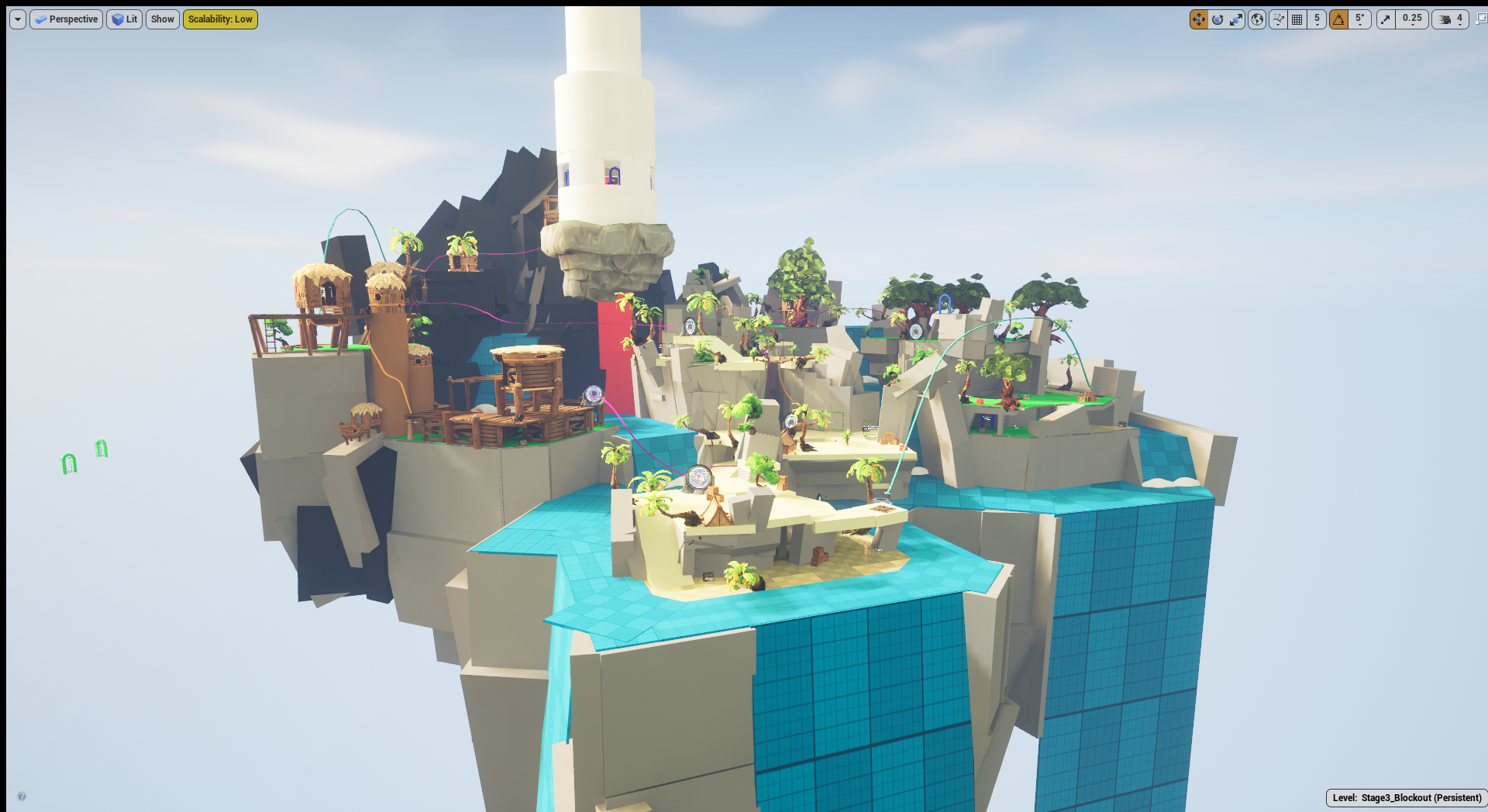
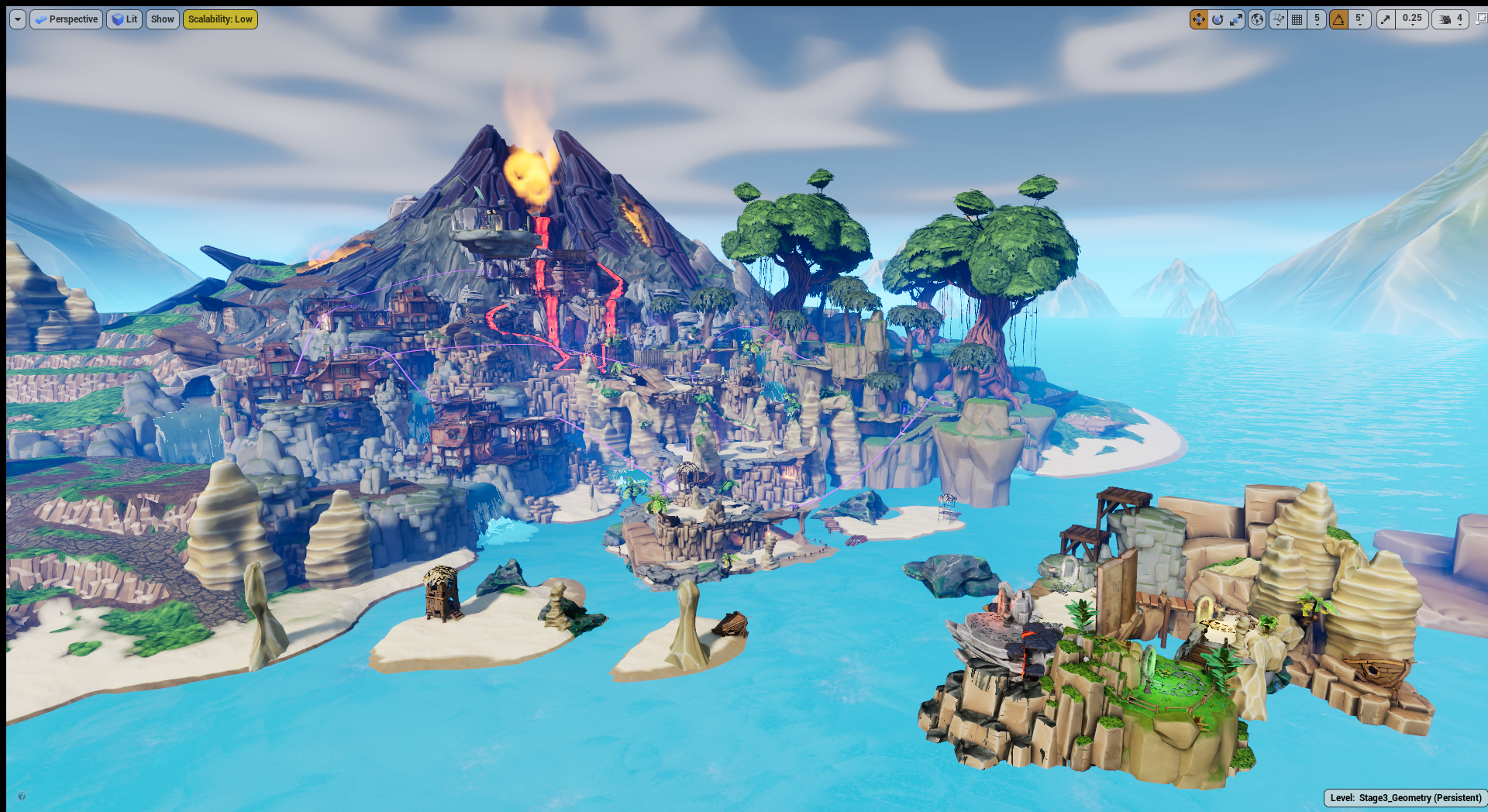
Inkdom was shelved as the Surge Stadium funding process began to stall and we moved on to working on an upcoming asymmetric multiplayer horror (heavily inspired by our work on Hallow Realm) VR game for the Oculus Quest 2. I am again Lead Designer on that project.
 Berto Ritger