
↑ In addition to designing all of the levels shown in the video above I also designed all of the UI elements and animations for the game in Abode Illustrator and implemented them in UE4 UMG. I also edited this particular video in Adobe Premiere and recorded the vast majority of its footage.
My contributions to VR Champions include:
- All level design—starting with 2D drawings over the floorplans of our buildings, moving then to playable blockouts in UE4, advancing to a period of playtesting and revision, and concluding with full gameplay implementation and public release.
- All weapon behavior & balance—ammo counts, damage rates and AOEs, reload times, and pickup placements.
- All UI elements, animations, and implementation—starting with 2D asset creation in Adobe Illustrator, importing to UE4 UMG, and finally hooking up each UI element to relevant gameplay events with Blueprint code.
For the last 4 years I have been the level designer for VR Champions—an arena-scale VR Arena Shooter inspired by classics like Unreal Tournament, Quake, and Halo. The game has seen periodic updates as we juggle multiple priorities with Hallow Realm and other titles. In that time I have released a total of 5 completed maps, 2 of which have later been revisited with major design and aesthetic overhauls.
“Summit” Level Design

This map intended as a celebration of verticality and vantage points. A deep vibrant courtyard provides ample cover for close gunfights but is left exposed to the two team bases above. The space between the bases is open for long-distance crossfire for precise shooters, but provides enough distance that fast-moving players need not worry about getting sniped. This is VR Champions‘ most refined map, as it was the first I ever shipped (in 2018) and have had years to consider and implement tweaks to its layout as more and more people play. In 2020 it underwent a massive design and aesthetic rework, abandoning the Mirror’s Edge-inspired minimalism of its first shipped iteration in favor of a much more lush Sci-Fi. However, it originally began in Maya:
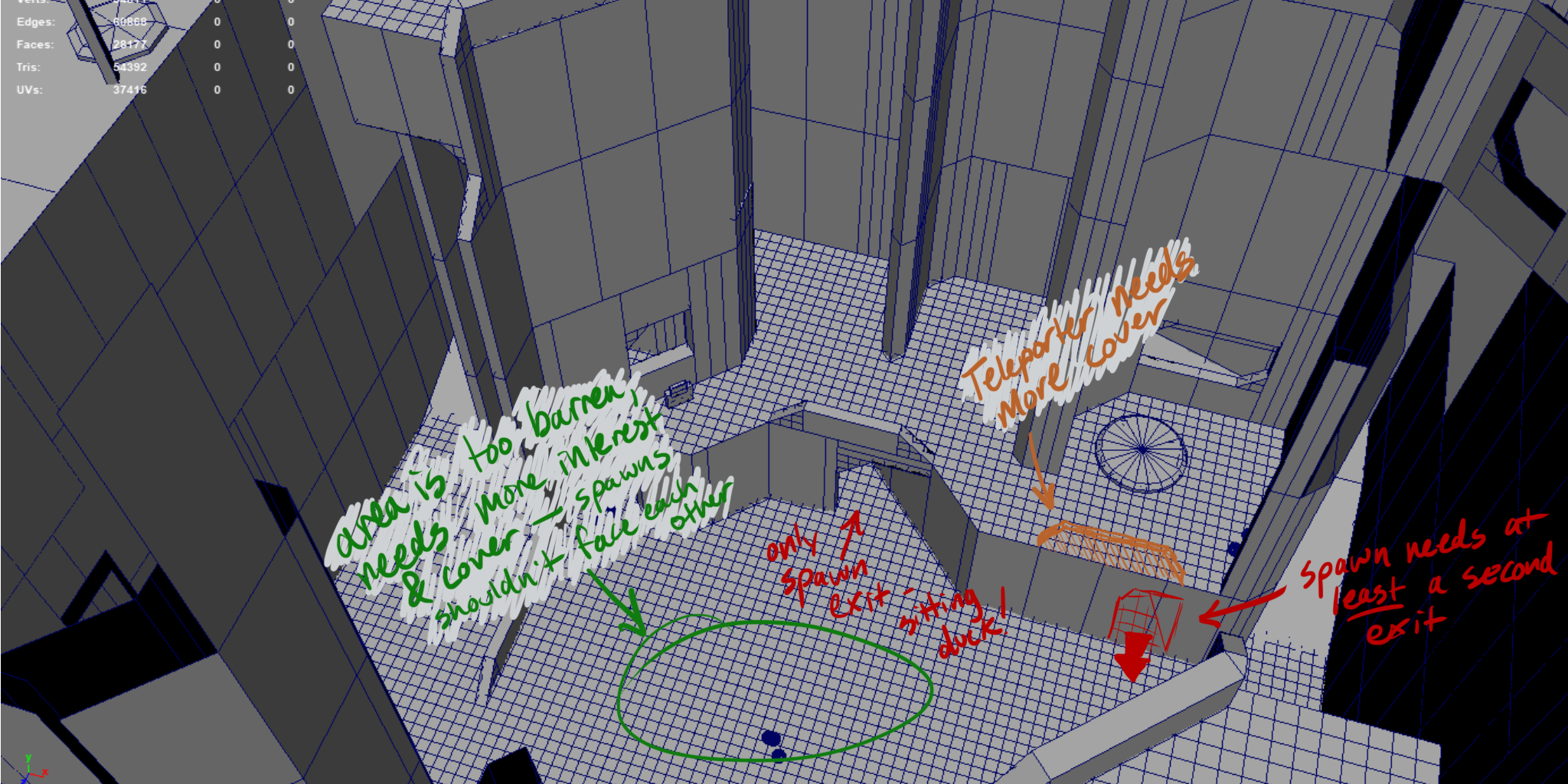
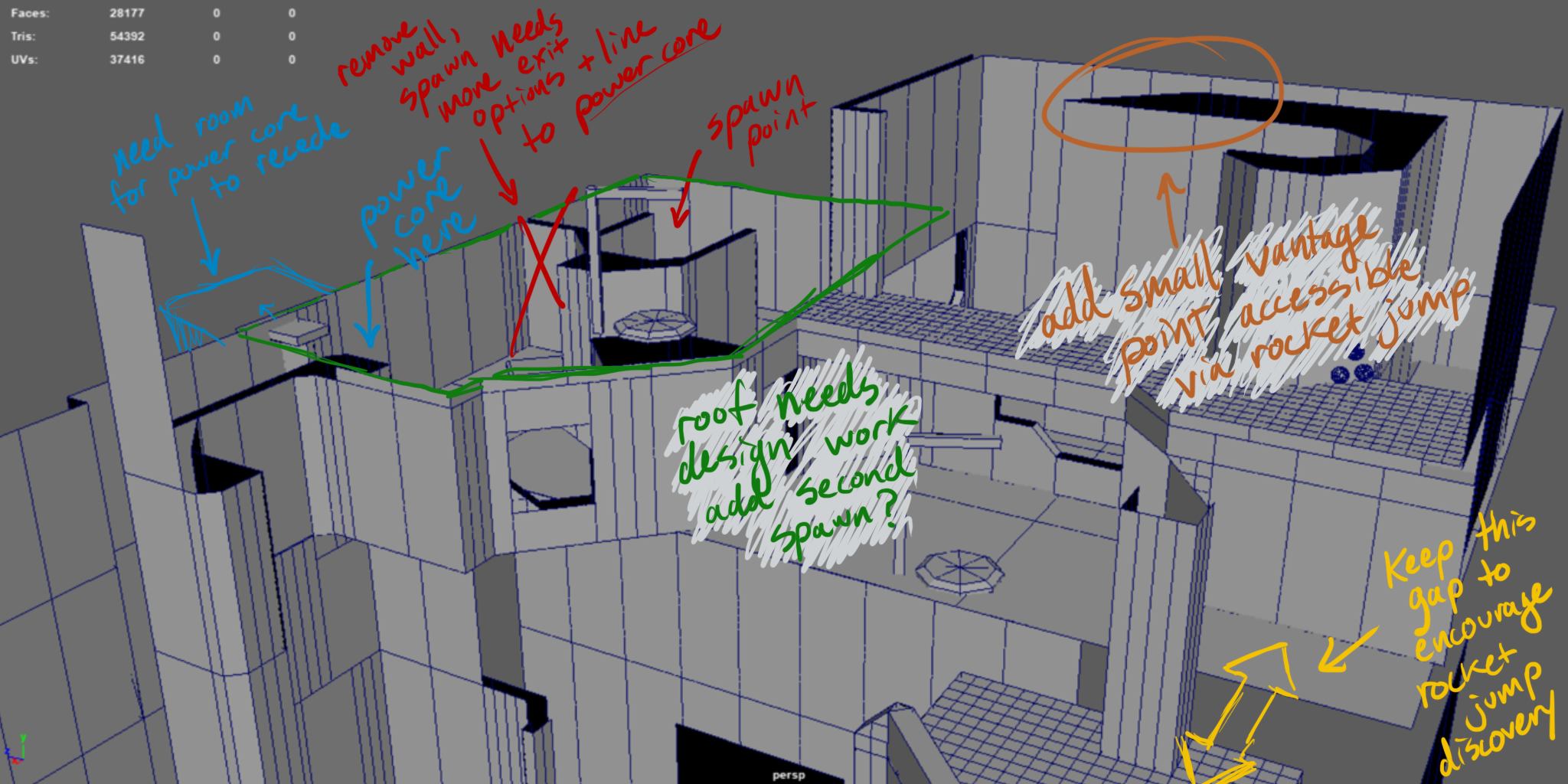
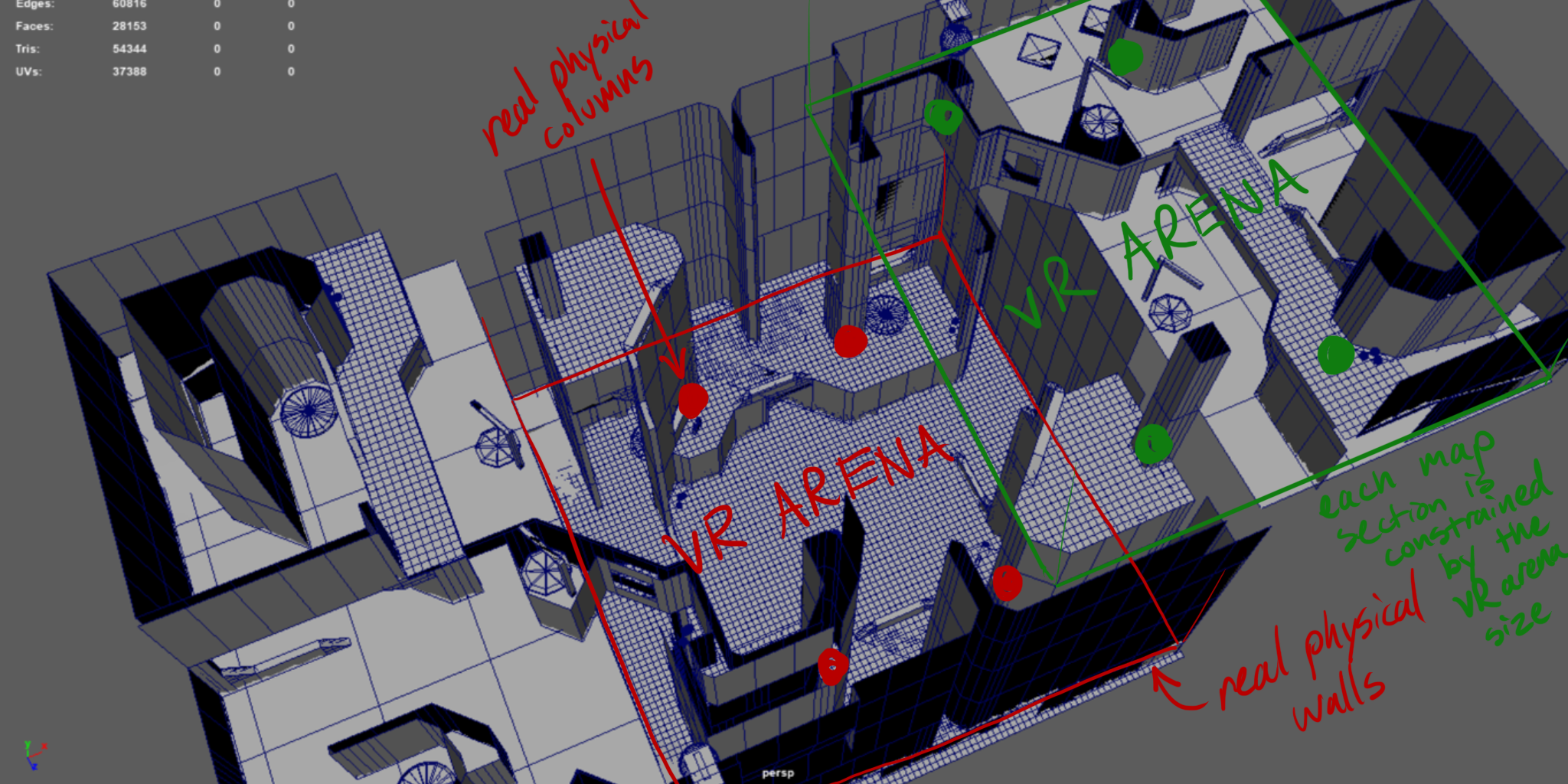
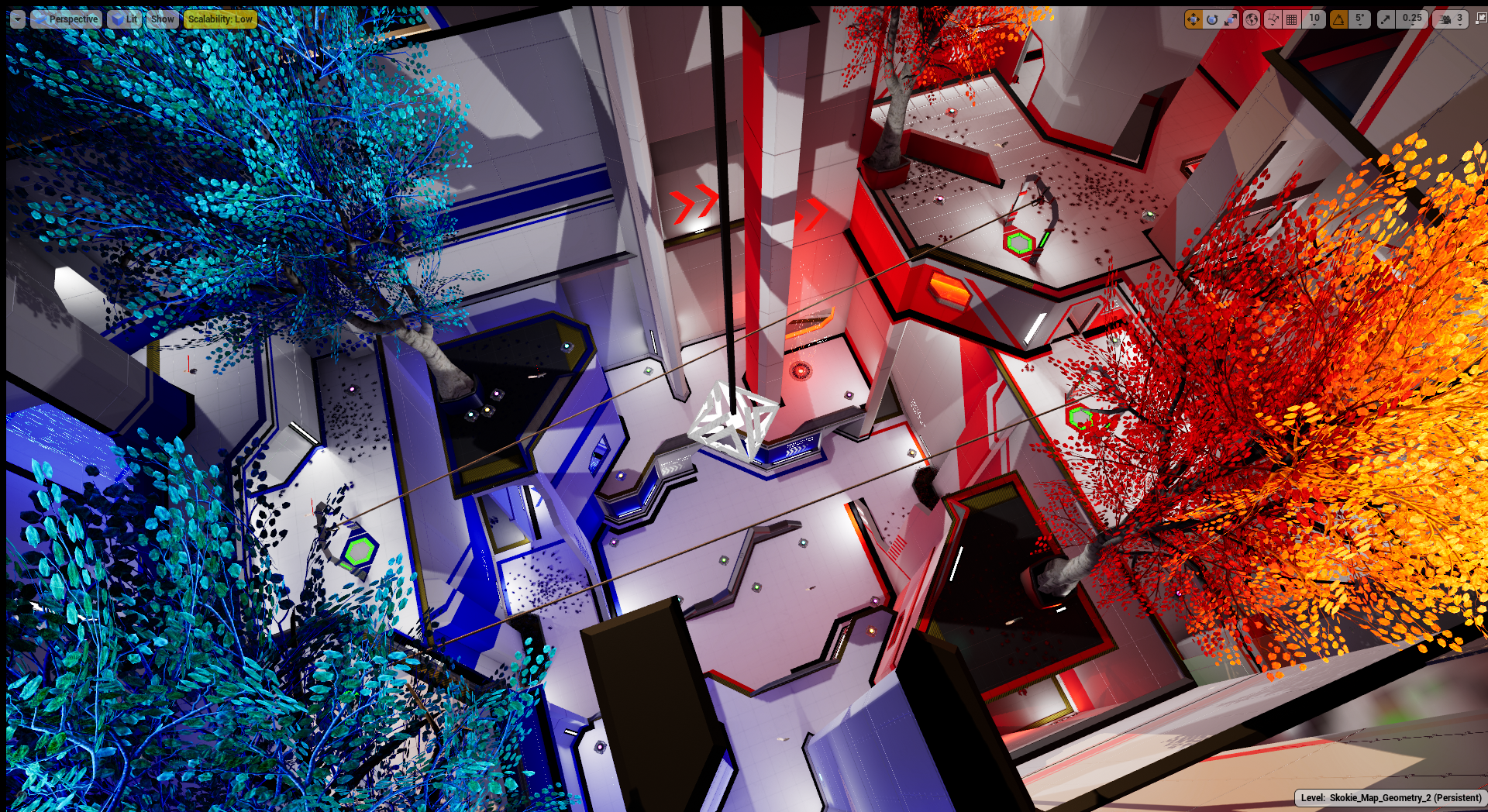
As I tried to adjust to a new workflow and new VR arenas in Skokie I started the Summit design process with Maya modeling. Those initial Maya blockouts were touched up after playtesting and were converted to the shipped meshes you see below. Thankfully we later changed to a much more visually rich aesthetic (though I do miss the easy player contrast of our original look).
Symmetry & Simplicity
A huge number of VR Champions players are newcomers—to VR, to location-based VR, or even to games in general. They also play in pre-purchased sessions of only 30 minutes each. For those reasons it is imperative in my design process with all VR Champions maps to prioritize the ease of map comprehension for players. All VR Champions maps are symmetrical in design, meaning any player that’s learned half the map has learned the whole map, cutting down drastically on their confusion and exploration phase of play. They are all also deliberately simplistic in layout—at least insofar as they do not take long to comprehend. But we do of course have many repeat customers and competitive players! For them (and myself) I always make sure to include enough subtle traversal options and obscure but effective sightlines to satiate their sweatiness (quite literally, some players will leave a session looking like they just left the gym).
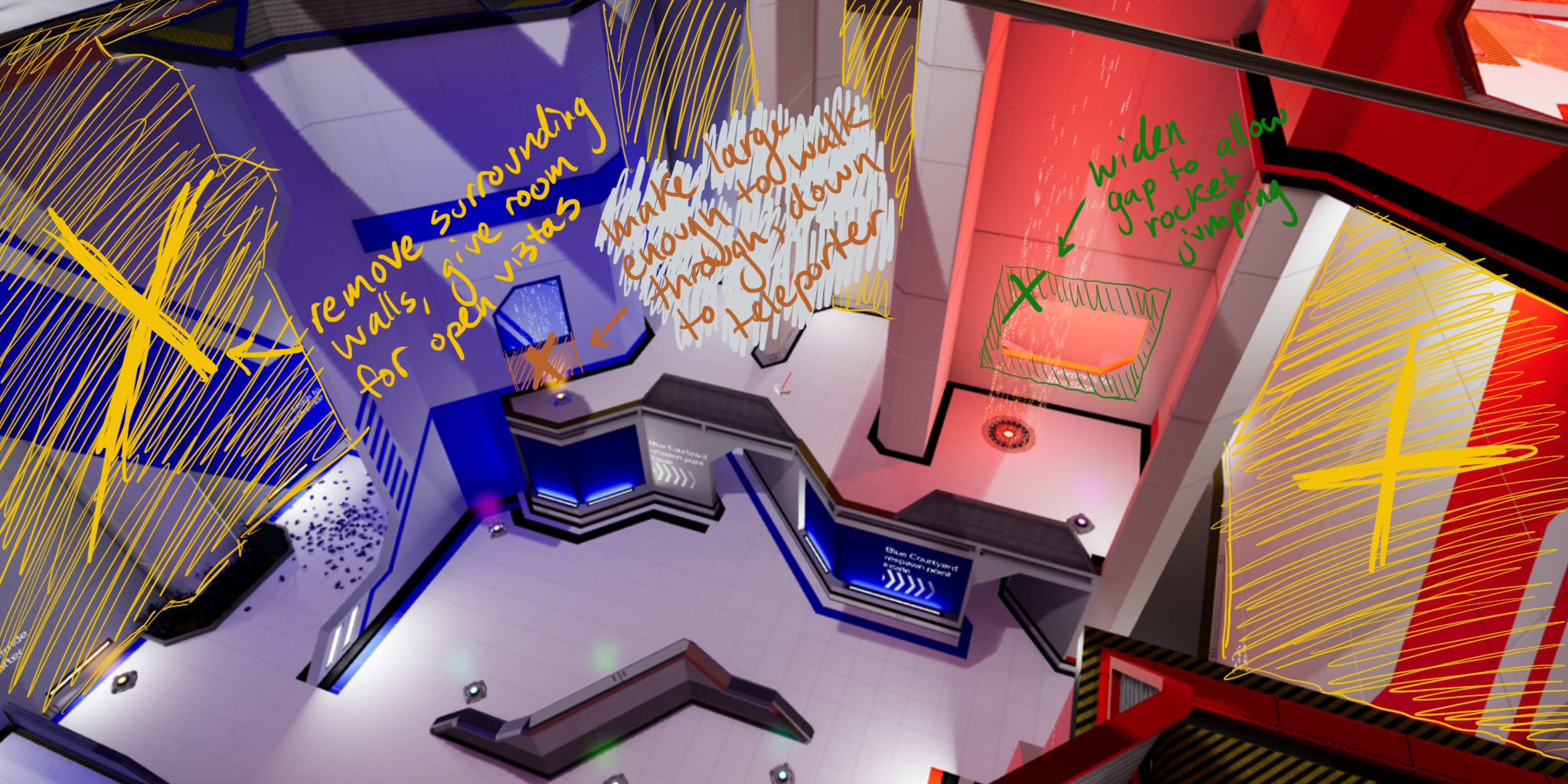
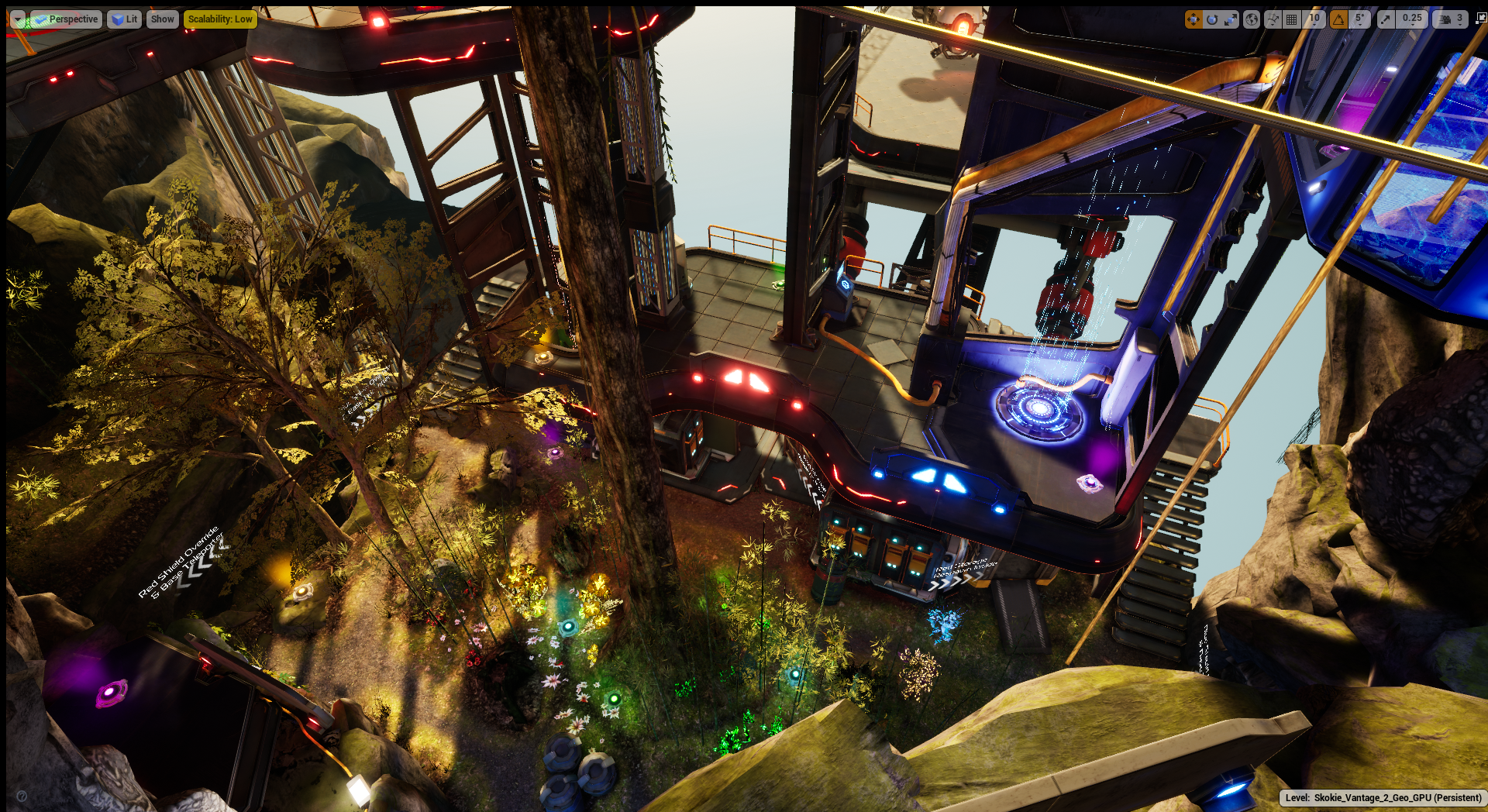
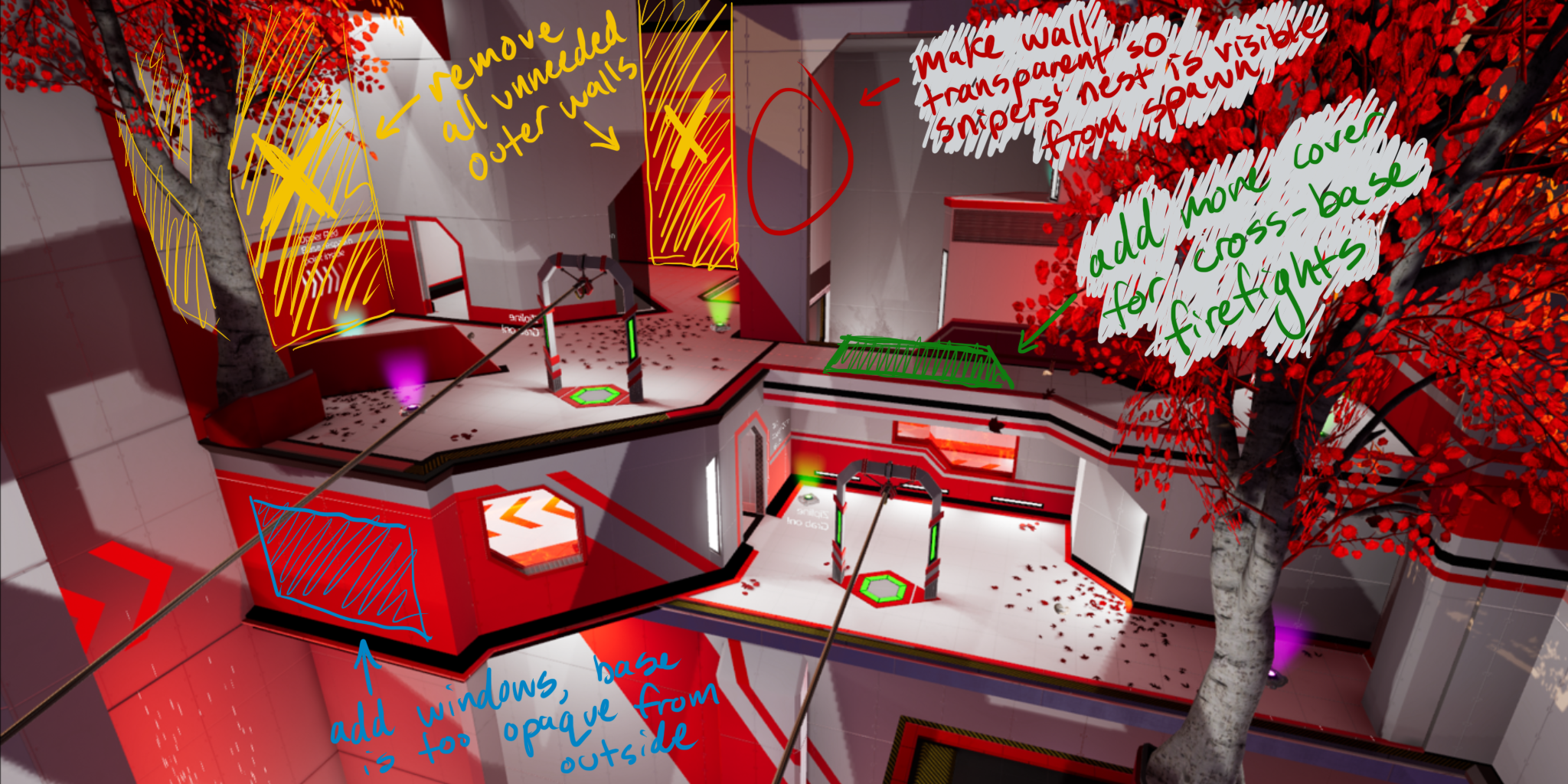
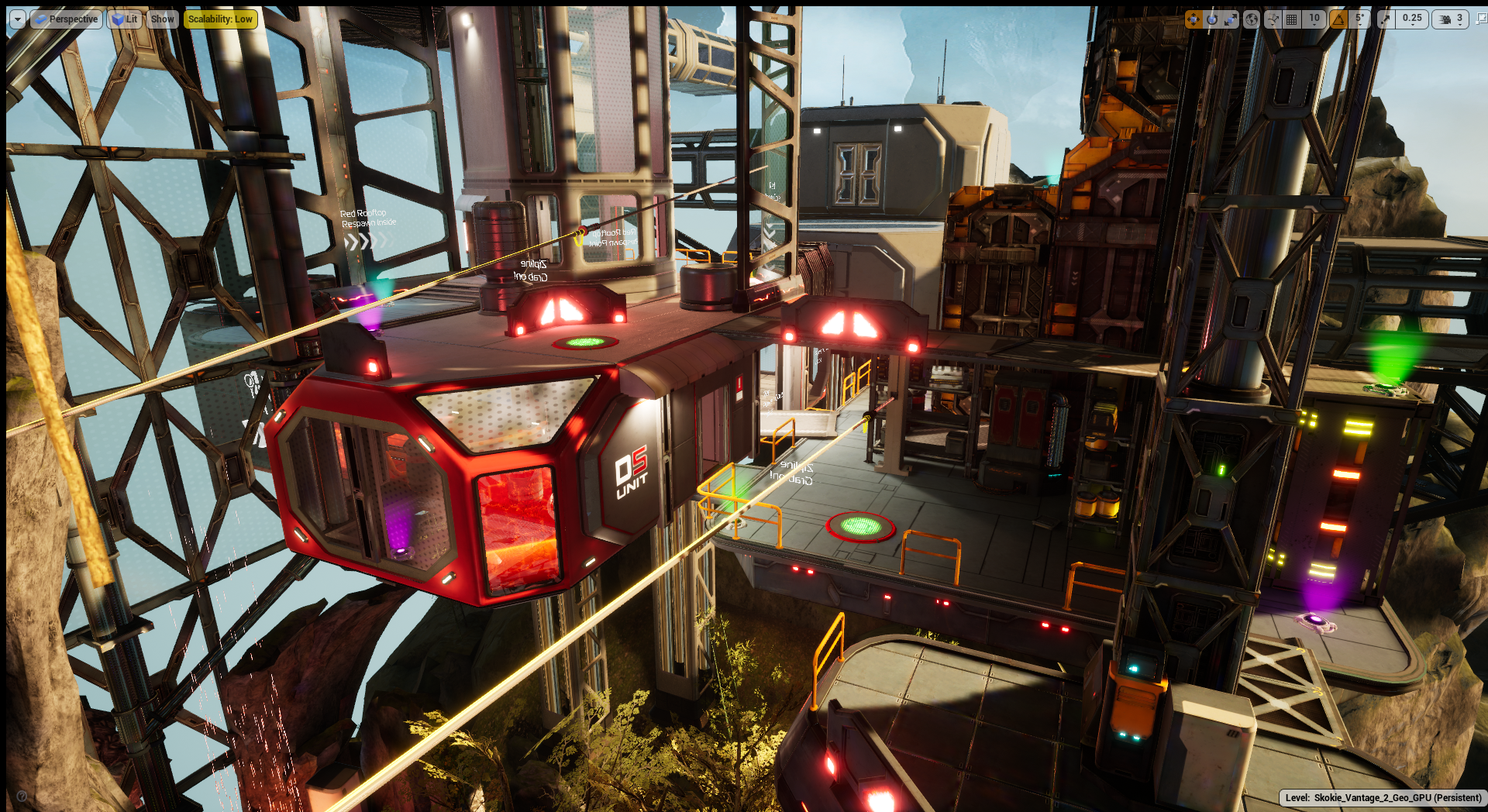
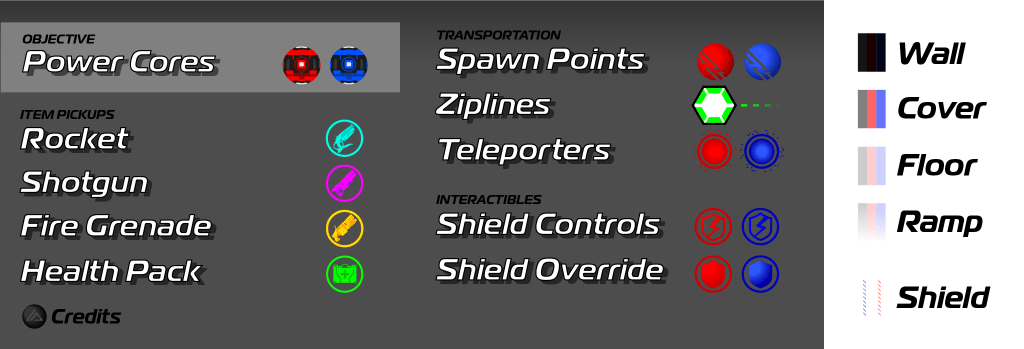
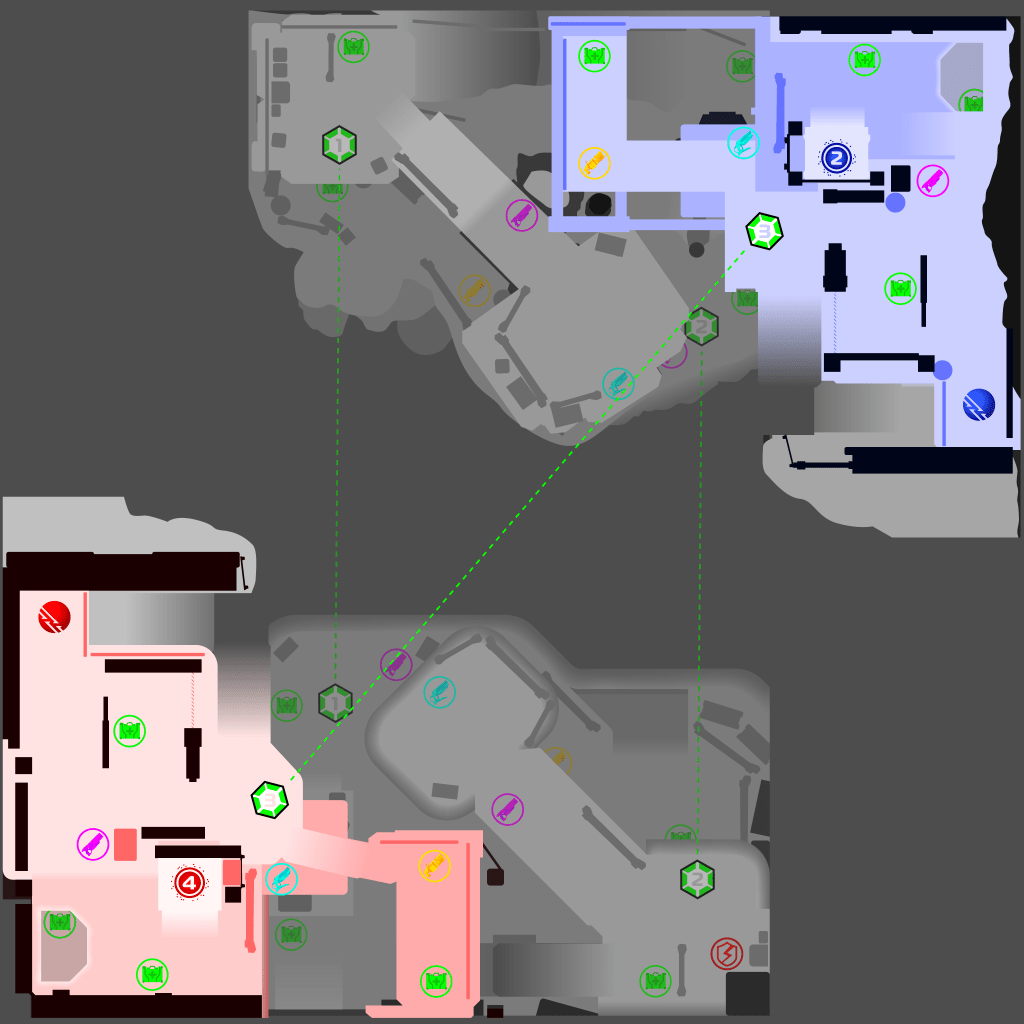
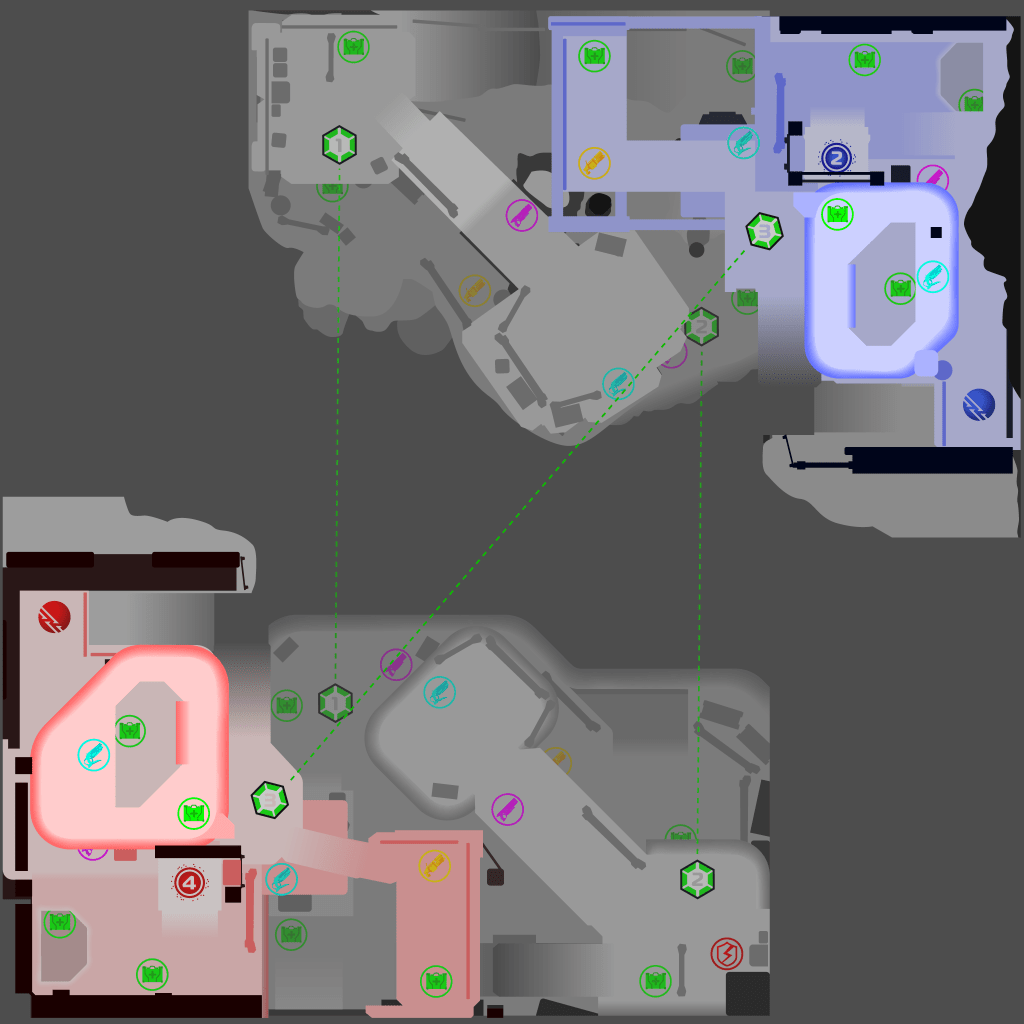
Originally Summit was called “Vantage,” and below are top-down views of the two iterations of the map with the key changes I made highlighted. I created these top-down vector renderings of Summit in Adobe Illustrator, including the icons. The original Vantage versions of these renderings were done by a previous concept artist.
Team Bases

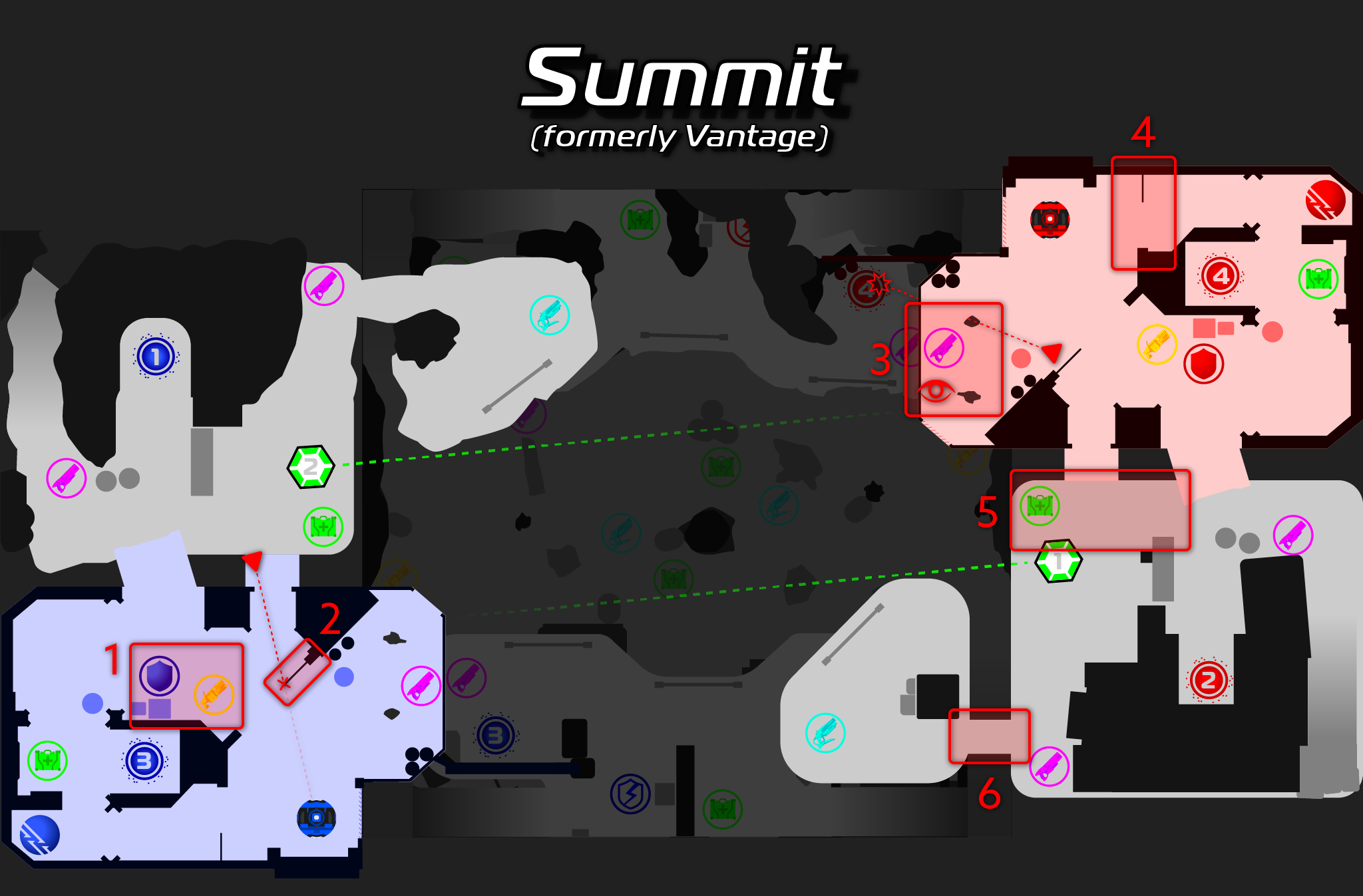
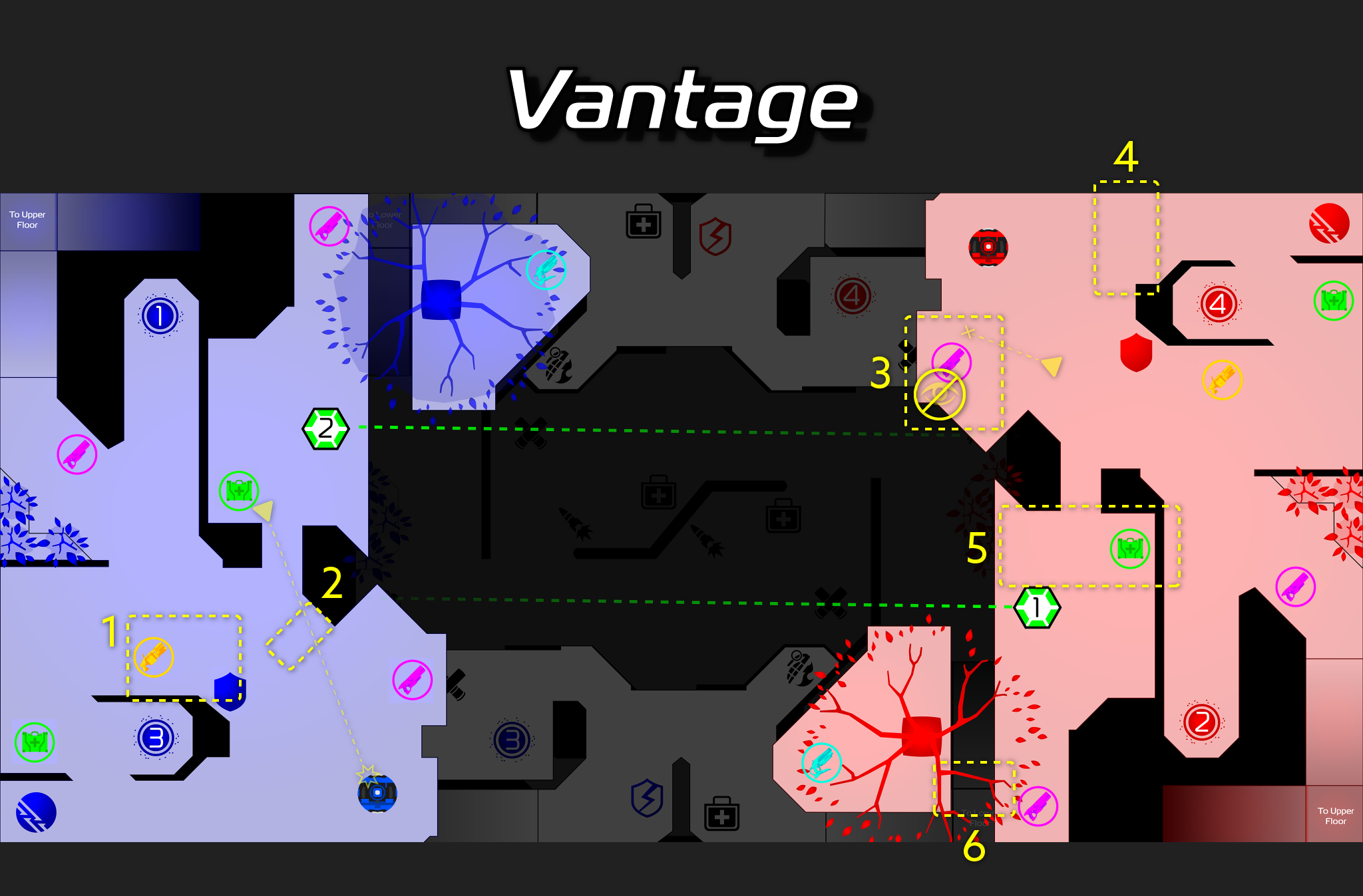
- Swapped placement of shield controls and fire grenade spawn. This allowed the shield controls to be slightly closer to the base spawn point, and the fire grenade (highly effective against the Power Core) to be placed more directly in the path of base attackers.
- Added transparent but solid piece of cover blocking doorway sightline to the Power Core. This sightline was the most problematic aspect of Vantage. It had both extremely good cover, access to a health pack, and direct line-of-sight to the Power Core. With the change, players must now enter the base to be able to shoot the Power Core—exposing them much more to defensive gunfire. Additionally the health pack was moved to the opposite side of the door (A5). It is less convenient now—and rightfully so—without the need to remove it entirely.
- Added transparent glass to the wall and floor, along with small open holes in the floors large enough for projectiles to pass though. This change was done to drastically widen players’ views. Previously, with a single window and opaque walls and floors, defenders lacked much situational awareness and attackers had no idea what to expect before entering the enemy’s base. The small holes in the floor glass allow for precision shots from more skilled players down to the courtyard teleporters (D1).
- Added small transparent cover. This was done to provide additional cover both for newly-spawned players and for those attacking the Power Core without obscuring internal base sightlines.
- Removed previous wall, leaving room for players to walk. The original wall used to only have a window that was both rarely used for zipline defense (its original intention) and narrowed attacking players’ base-entry options to only the main doorway. Its removal both expended attack options and defensive rotation options.
- Added walkable bridge geometry to the “rocket island”. This was done to more directly insinuate to players that the area is actually accessible. It was previously disconnected and only accessible via rocket jumping. This led to very few players fully comprehending that they could actually get to it. The bridge was deliberately placed far to the edge of the map in order preserve original intent of encouraging rocket jumping (which is simply more fun, especially jumping over a massive 25-foot drop in VR).
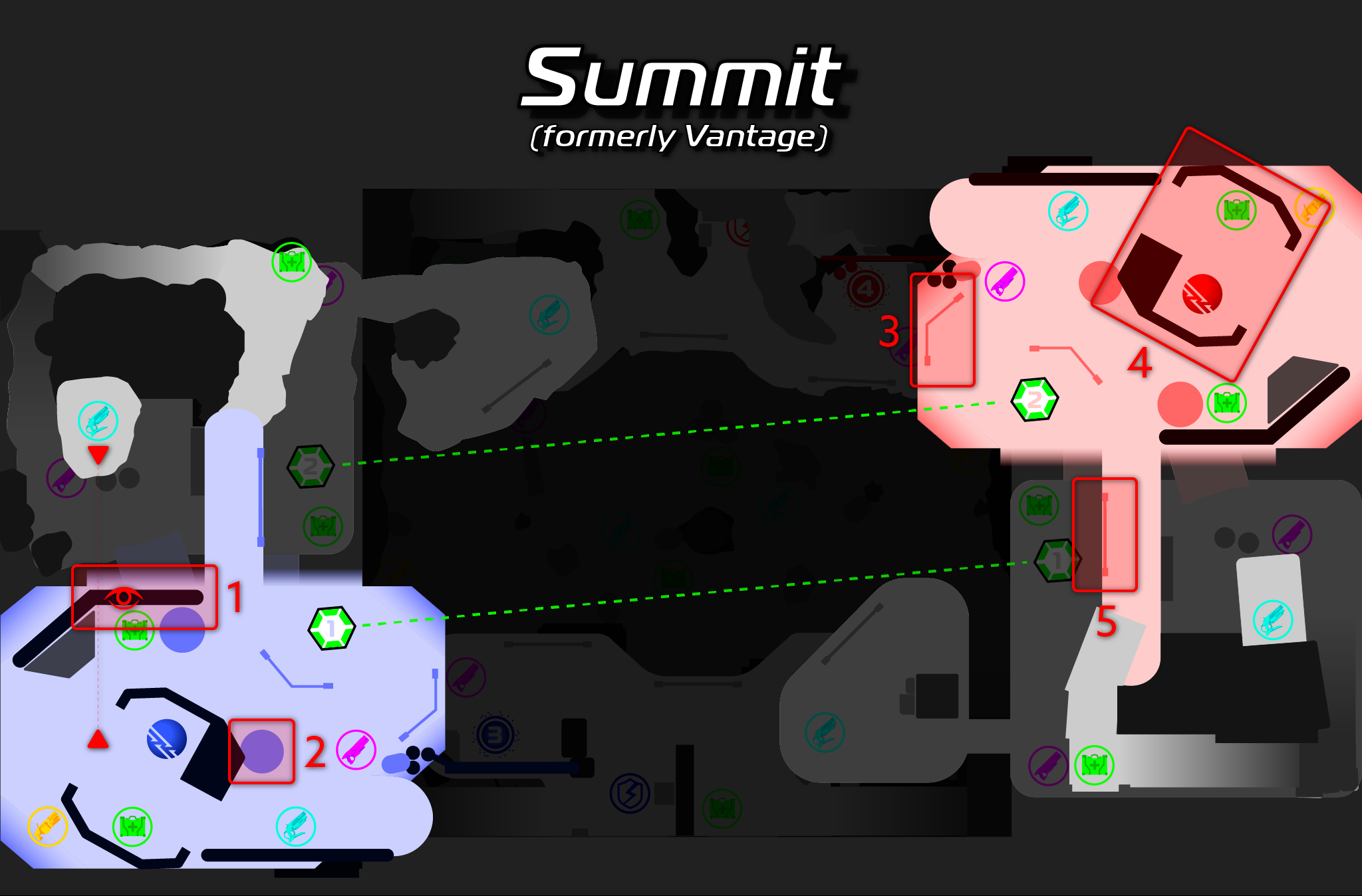
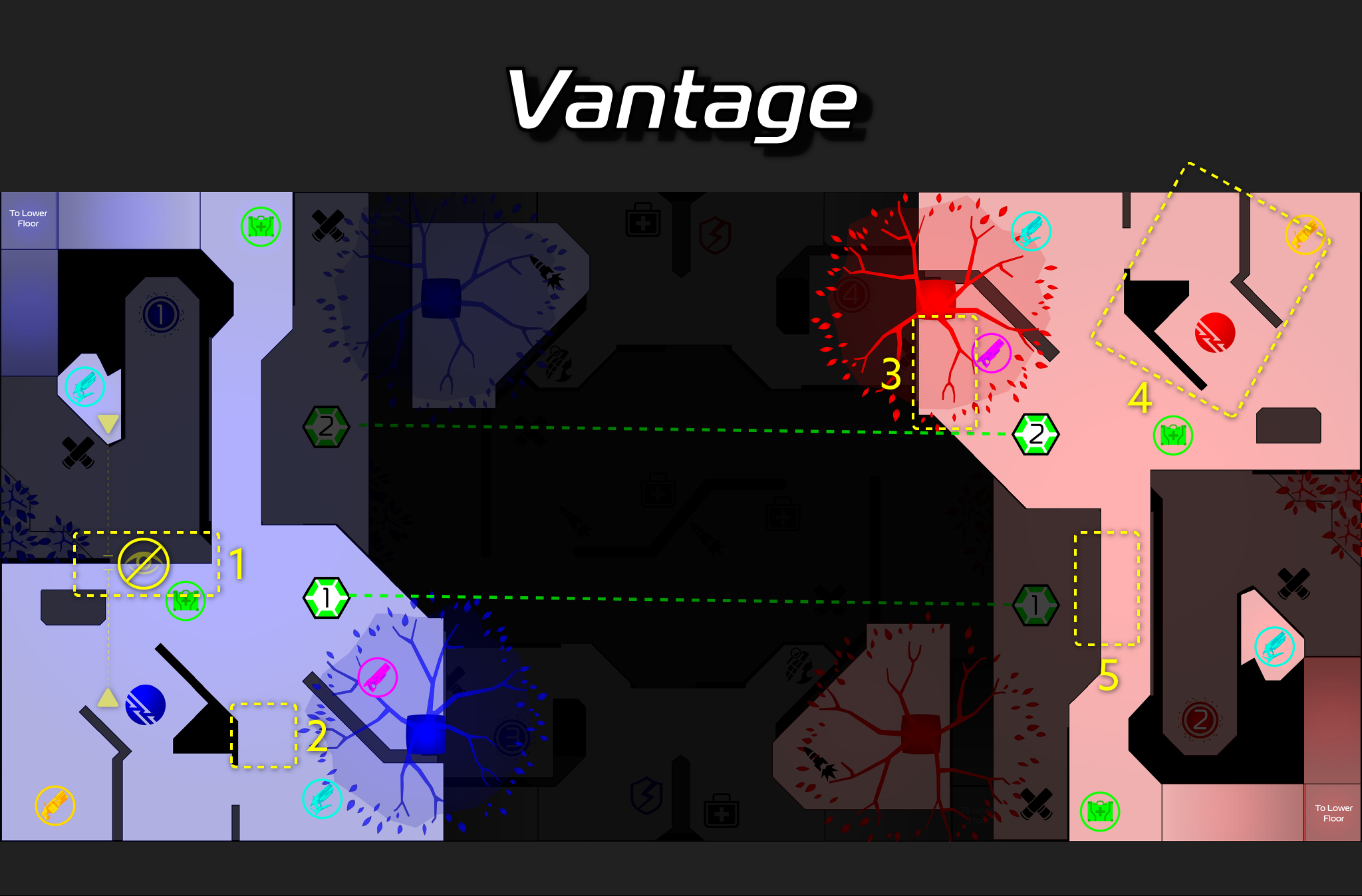
- Turned this previously opaque wall into a transparent window. Players who spawn at the top of their base can now immediately see if someone is stationed in the “crow’s nest” and determine how to engage. Previously the opaque wall heavily advantaged the players in the crow’s nest who have access to the rocket spawn, and direct line of sight to the most effective counter (the other rocket).
- Added a full-height piece of cover outside rooftop spawn room. Previously players walking out of the nearby doorway would be almost entirely exposed to long-range gunfire from the opposing base’s rooftop. This often led to instant-kills as soon as spawn protection wore off and was frustrating for players still getting their bearings. This additional cover helped give players additional time to adjust to their surroundings and a more nuanced environment to engage distant enemies.
- Added cover at the edge of the base roof. This was added to encourage and enable more effective base defense from the rooftop. Shooting down to the courtyard from the base roof edge was previously a death wish.
- Reoriented rooftop spawn room slightly and added nearby health pack. This change was to make the spawn feel more like a single room and not two rooms. The health pack was added due to the precarious position of the spawn. Players tend to take the most immediate fire if spawning on the rooftop and needed a way to patch up without running outside.
- Added cover to rooftop bridge. This was added to allow for more engaging cross-base gunfights. Previously players had absolutely no cover on this bridge and when damaged had no choice but to disengage, drop down, and look for a health pack.
Courtyard

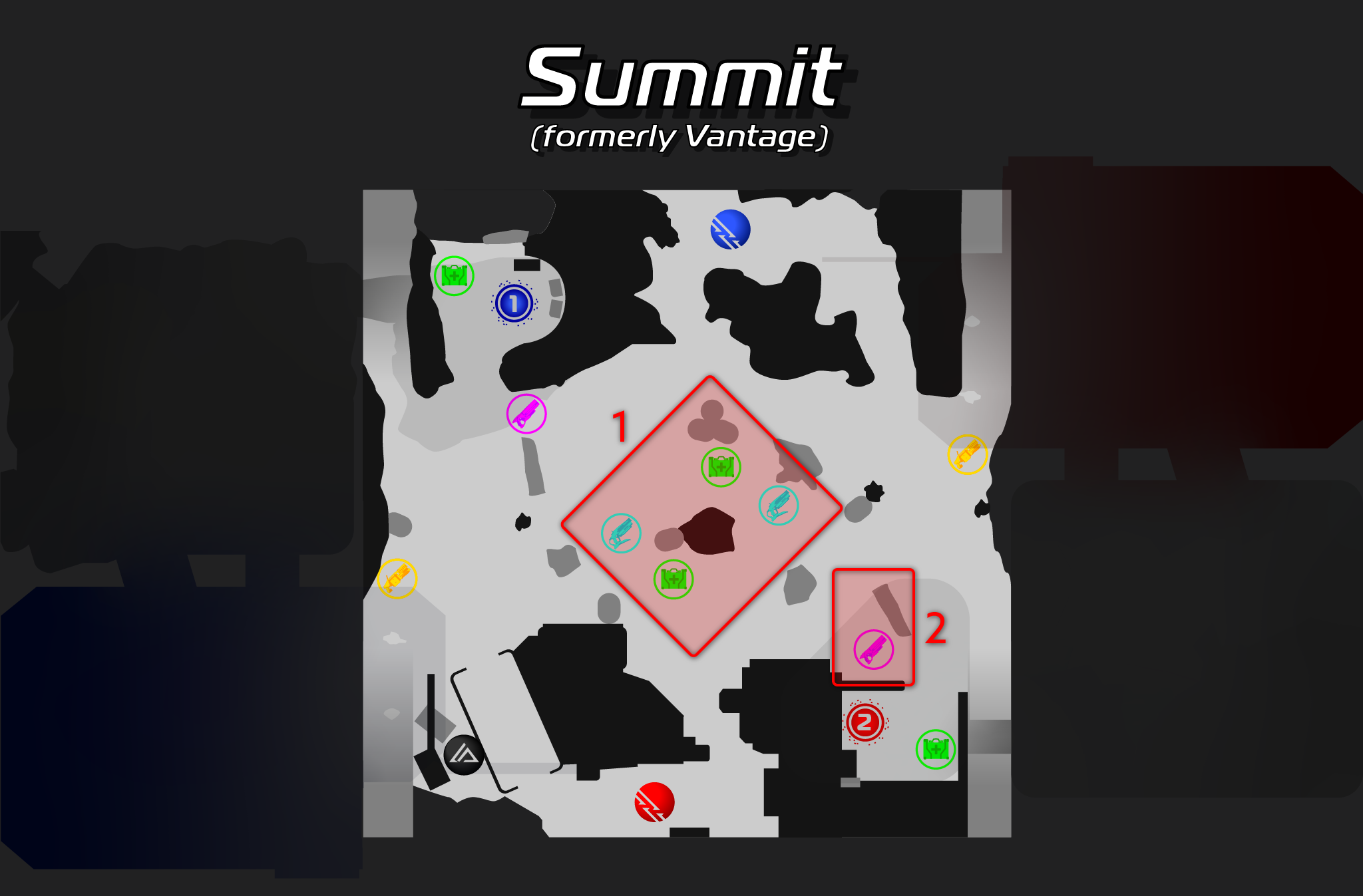
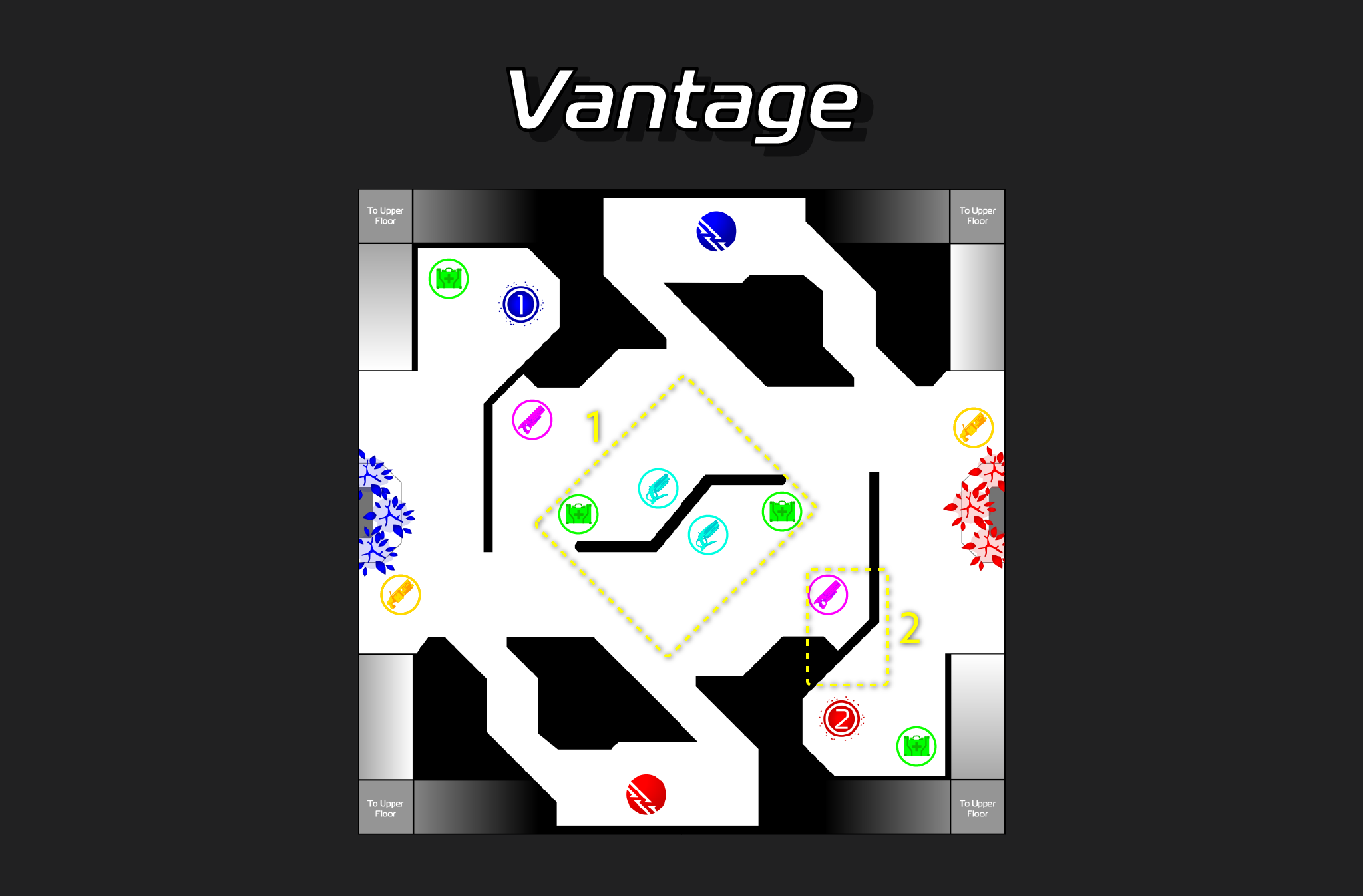
- Removed single piece of cover in favor of a wider array of smaller cover pieces and an extensive patch of tall dense grass. Players spawning in the courtyard needed a more intricate battleground, and more cover from players both above and across from them. The grass in particular provided two things:
- Enough visual noise to make picking out players from afar a bit harder, but not impossible.
- An interesting VR interaction that increased the sense of immersion (The grass bent down in reaction to hand, feet, and body collision).
- Removed long piece of cover extending from the teleporter. This piece of cover only served to deter cautious players from walking to the teleporter. They were so afraid to walk through geometry that they’d walk all the way around it, leaving themselves exposed to fire from above for much longer. In an effort to slightly increase the pace of play, and to save some people from themselves, I decided to remove it. It was also now redundant with the additional cover and foliage in the courtyard.
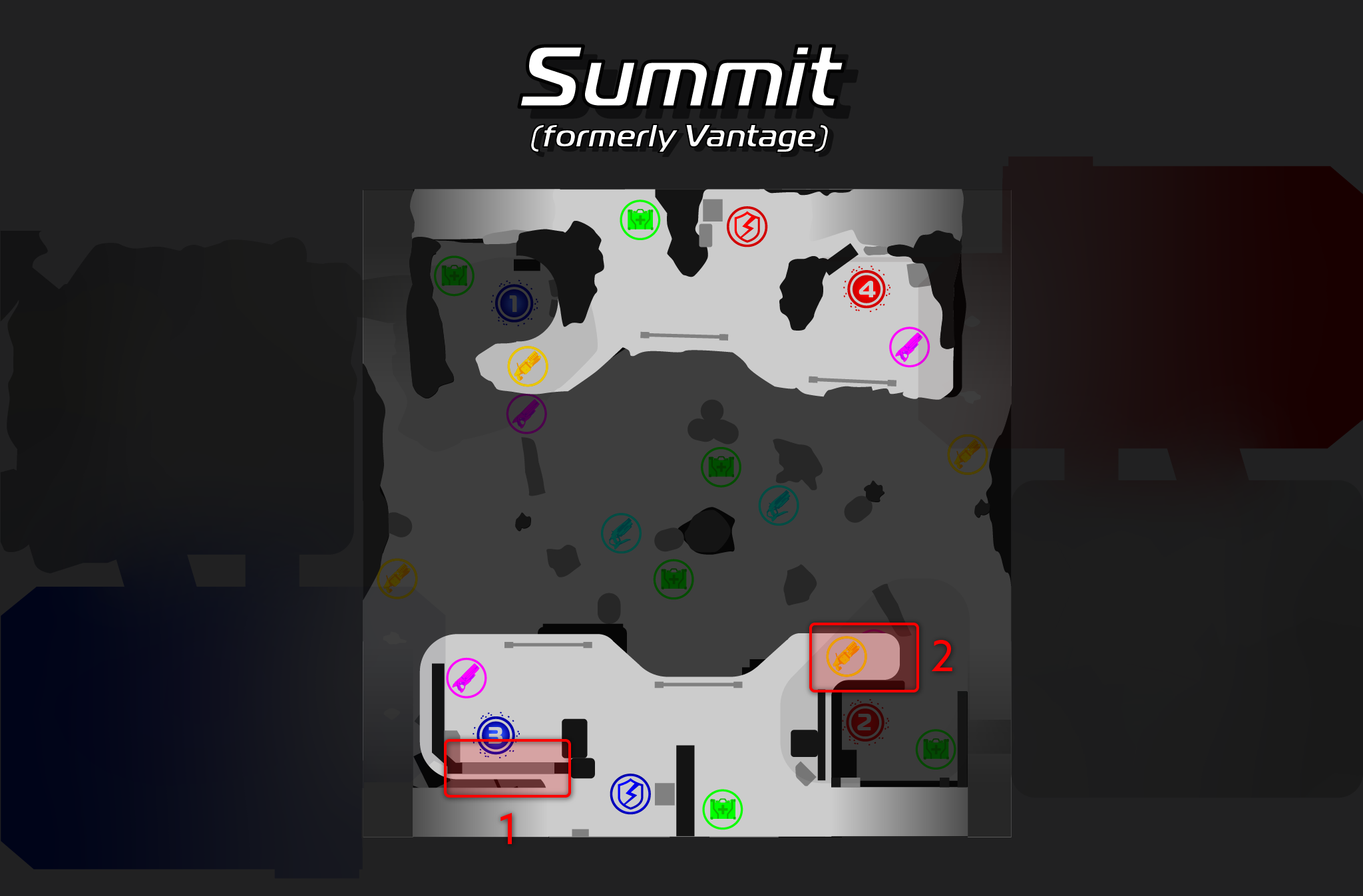
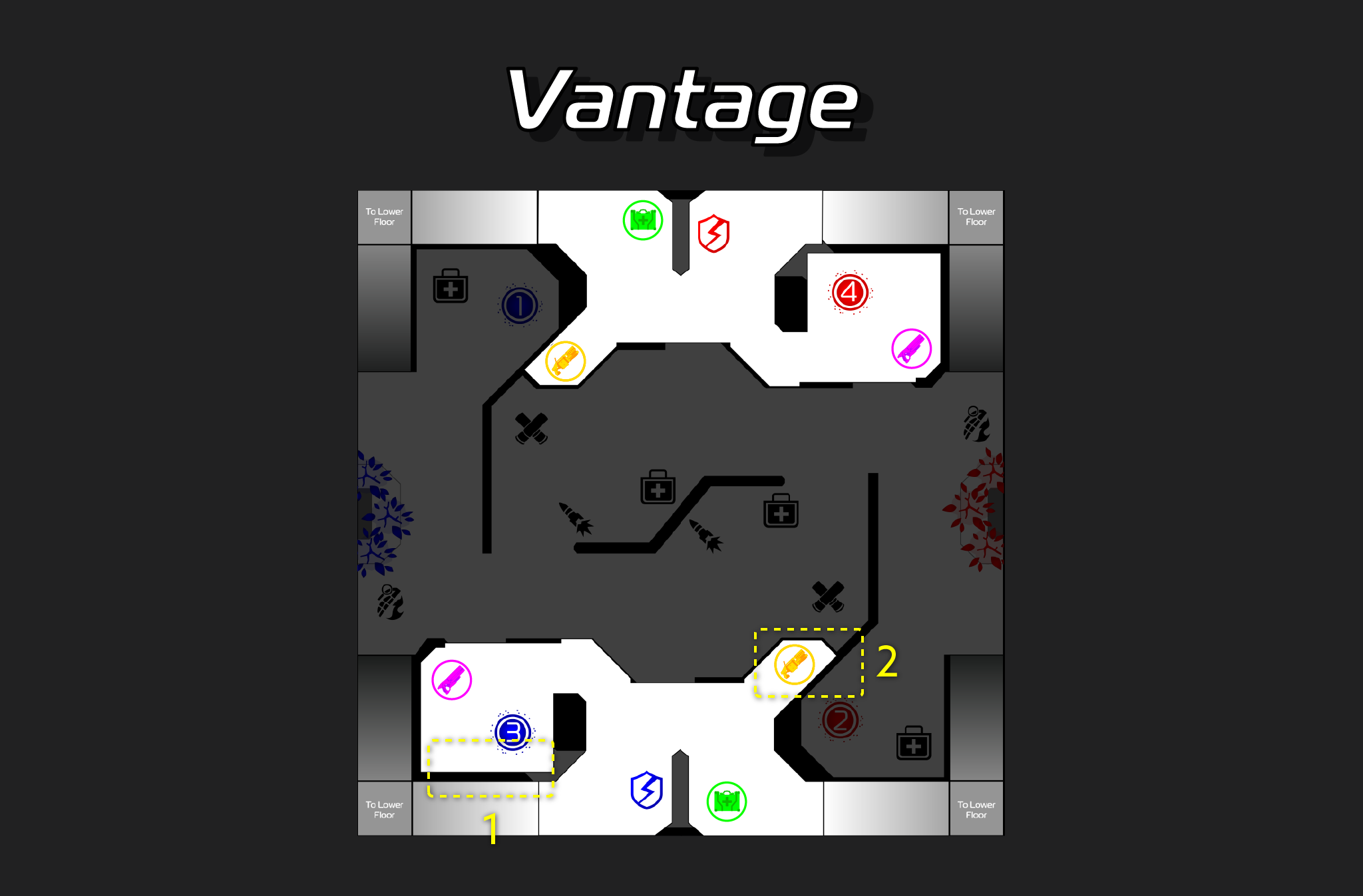
- Expanded the previous window to a large hole in the wall traversable via rocket jumps. The only paths to these two teleporters (3 & 4) that lead to each team’s base were highly exposed from the sides and from above. This made it a deadly proposition for many players to pursue them. I chose to open up the back wall (which used to be a narrow window) and allow players who were savvy with their rocket jump ability a safer way of entering the teleporter from the outer ramps. This was somewhat offset by the addition of the wall and floor windows in either base (mentioned in A3) that have direct line-of-site to this area.
- Replaced previous window with empty walkable space. This area (same on the opposite side) used to be a window that players could be walked through as a short-cut to the teleporter below. In its original state, this gameplay function was unintended (the bottom of the window would clip through players’ legs). However, it grew to become such a well-liked aspect of map by myself and other more competitive players that I removed the wall in this area to encourage everyone to use it.
“Reclamation” Level Design
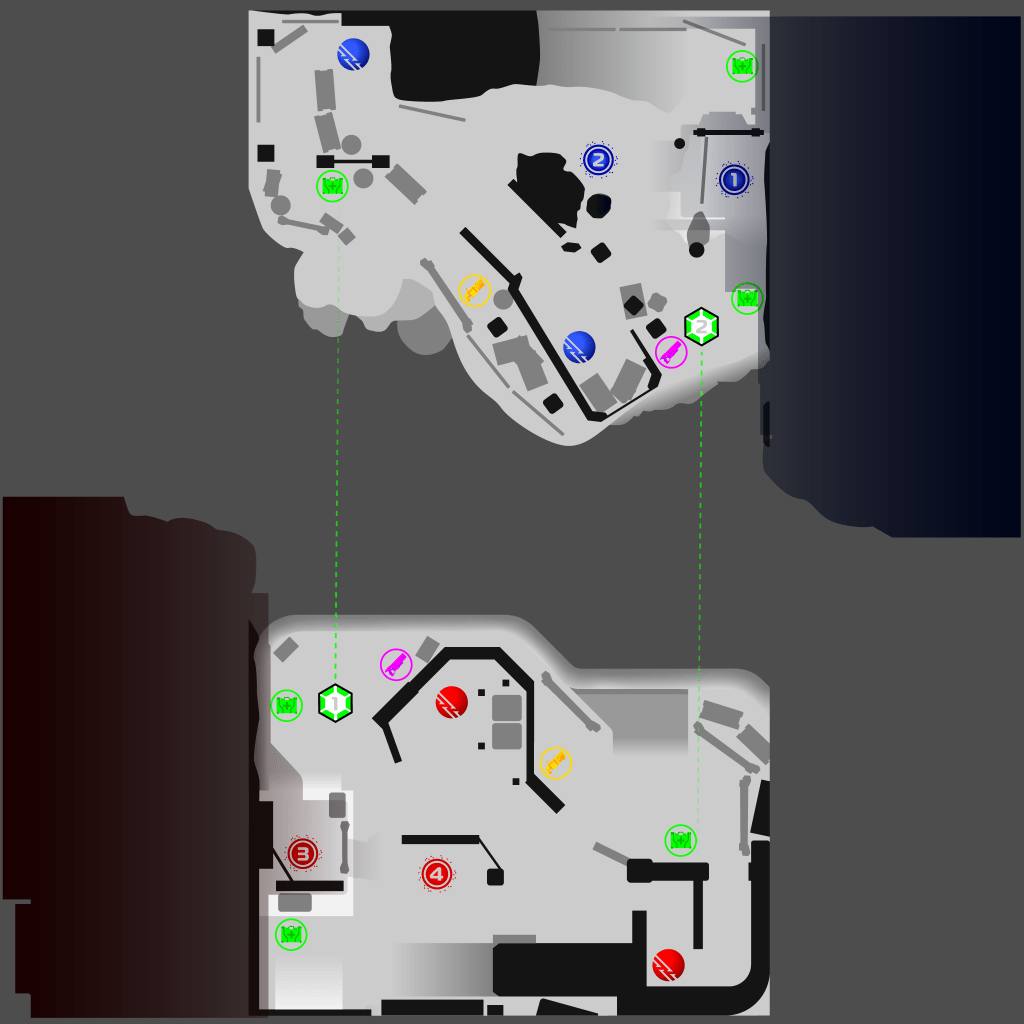
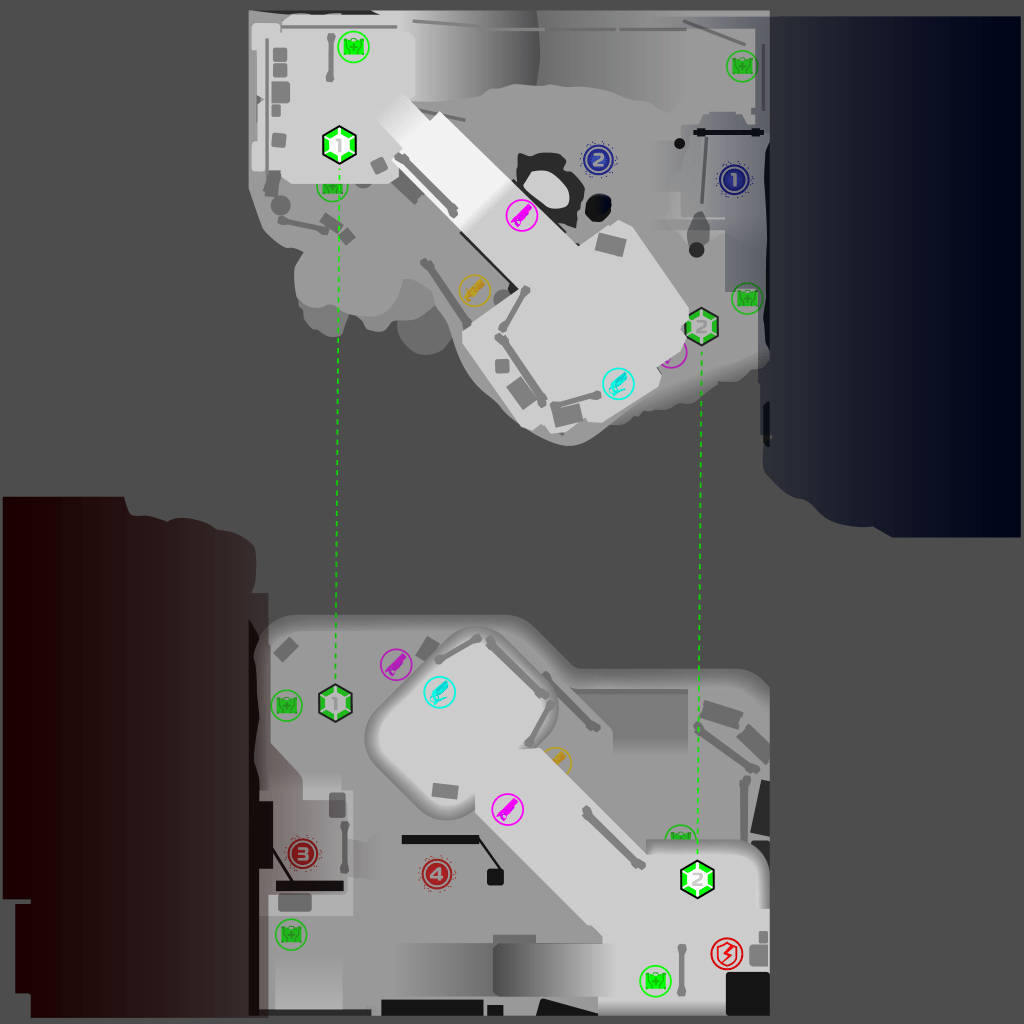
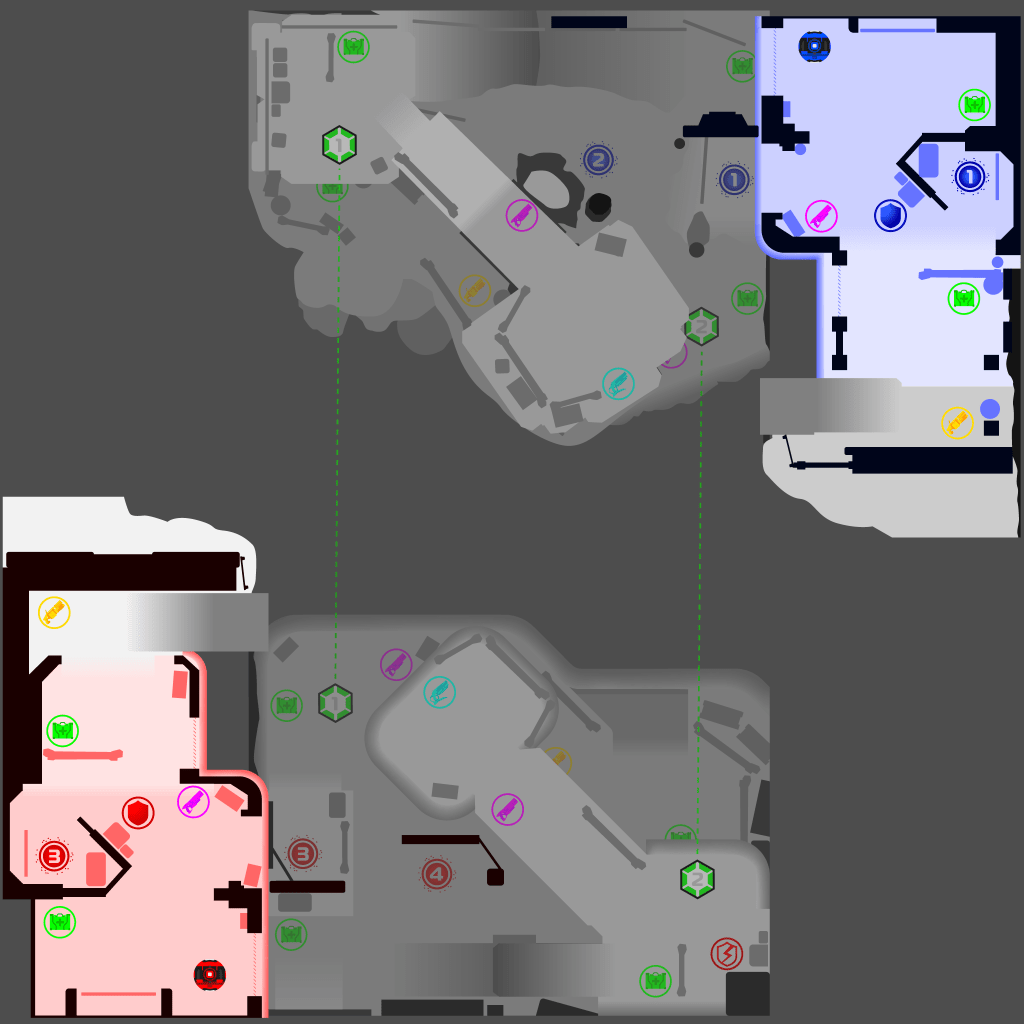
This map is a sibling to Summit in terms of design. Meant to deliver the same verticality but in a package that could fit within the much smaller VR arena MassVR has in Bloomington, IL (2400 fewer square feet):
Below is Reclamation’s Map Guide that I created in Adobe Illustrator:
 Berto Ritger